16 Modern Paver Edging Ideas to Create Beautiful Landscape Borders
Uneven lawn edges can make even a beautiful yard look unfinished and messy. A simple border adds structure, keeps materials in place, and creates a neat, polished outdoor space that lasts longer.
Many homeowners struggle with grass spreading into flower beds or mulch shifting after heavy rain. These paver edging ideas offer practical ways to create clean borders while improving your landscape’s overall appearance.
A well-designed edge also makes yard maintenance easier and reduces time spent trimming around beds and walkways. Small improvements can completely change the look of your outdoor space without requiring a major renovation.
How to Choose the Right Paver Size for Your Landscape
Choosing the right paver size improves both the appearance and function of your landscape. Consider the space, project type, and design style before making your final choice.
- Match the space size by using large pavers for open areas and smaller pavers for narrow paths or compact gardens.
- Choose based on purpose with thicker pavers for driveways and standard sizes for patios and walkways.
- Complement your home style by pairing modern designs with large pavers and classic homes with smaller ones.
- Think about the layout since large pavers create a clean look while small pavers suit curves and patterns.
- Consider future maintenance by selecting a size that is easy to repair and replace if needed.
16 Modern Paver Edging Ideas to Enhance Your Outdoor Curb Appeal
Paver edging is a simple way to give your outdoor space a clean, finished, and stylish look. Here are modern paver border ideas to inspire a beautiful and well-structured outdoor space.
1. Straight Brick Paver Edging Along Walkways
A straight brick border creates a clean transition between garden beds and walkways. This timeless design suits modern and traditional landscapes while keeping gravel, mulch, and soil neatly contained throughout every season.
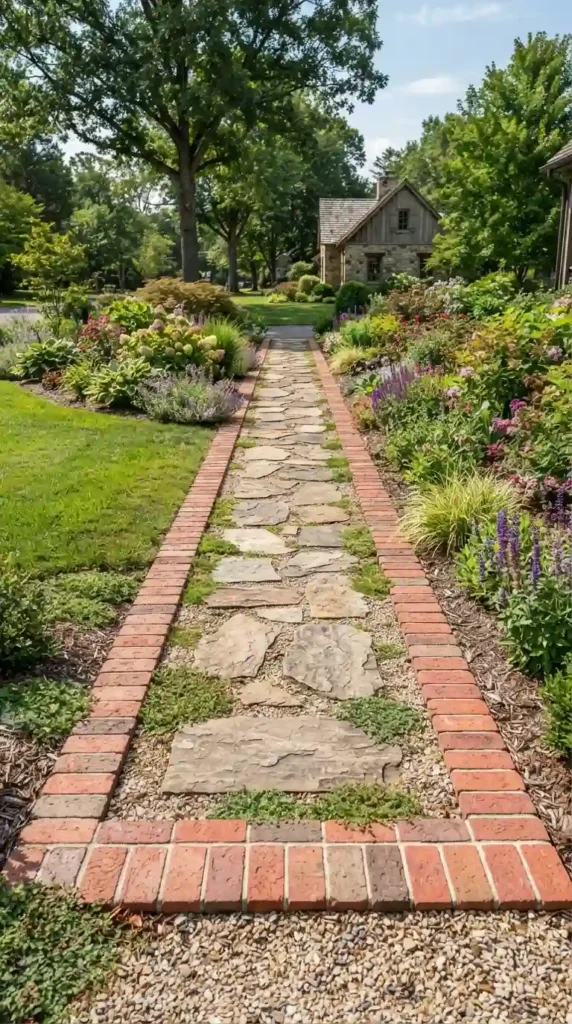
Install bricks tightly together on a compacted base for long-lasting stability. The simple layout makes repairs easy, prevents shifting over time, and gives pathways a crisp appearance with minimal maintenance throughout the year.
2. Curved Paver Borders Around Flower Beds
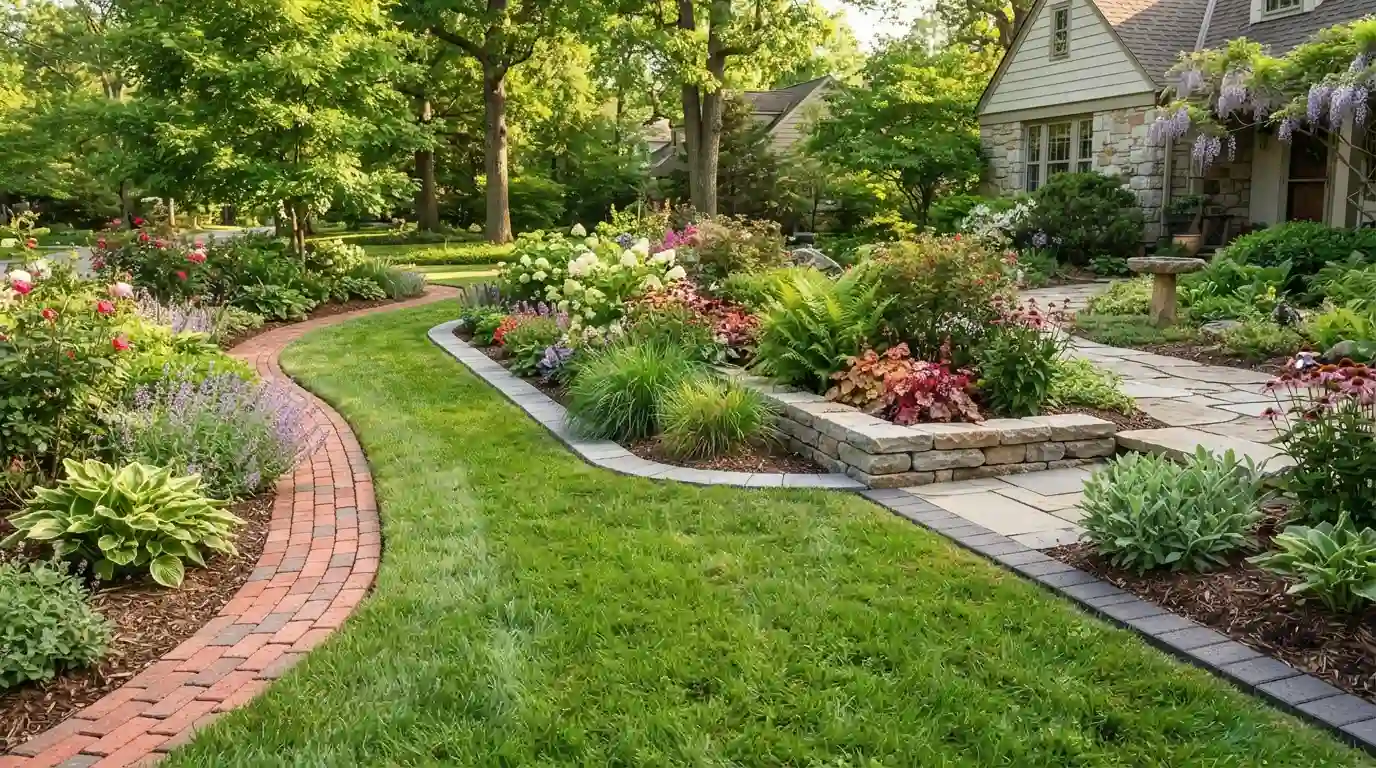
Curved borders soften the appearance of garden beds while adding graceful movement across the landscape. Gentle lines naturally guide the eye and complement colorful flowers, shrubs, ornamental grasses, and decorative ground covers beautifully.
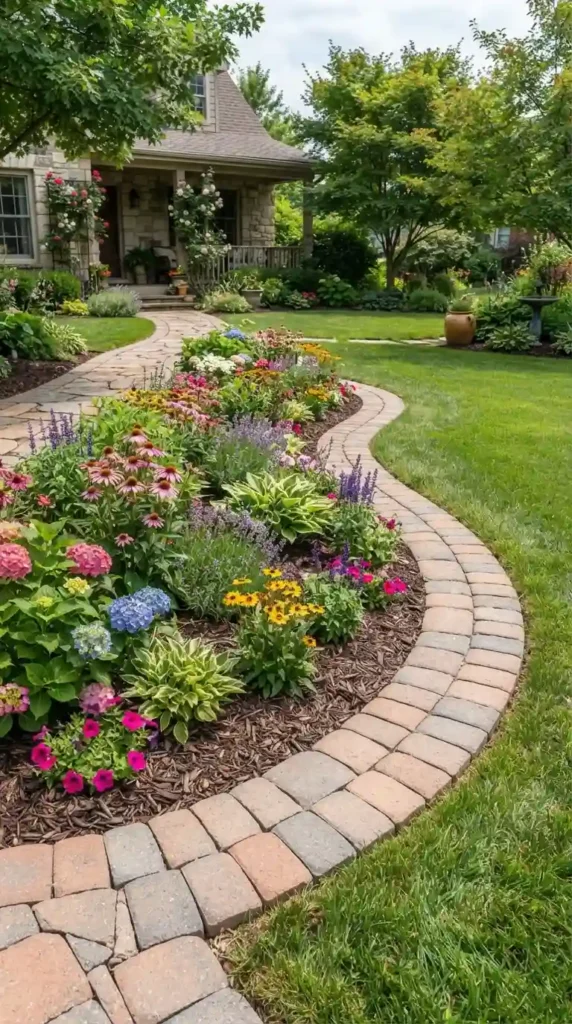
Choose uniformly sized pavers to maintain smooth curves without awkward gaps. Flexible layouts in these paver edging ideas fit almost any garden shape and help separate lawn areas from planting beds with an elegant, flowing finish.
3. Raised Paver Edging for Garden Beds
Raised borders create clear definition while adding depth and dimension to your landscape. They help contain soil, improve drainage, and provide an attractive frame that highlights flowers, shrubs, and decorative plants.
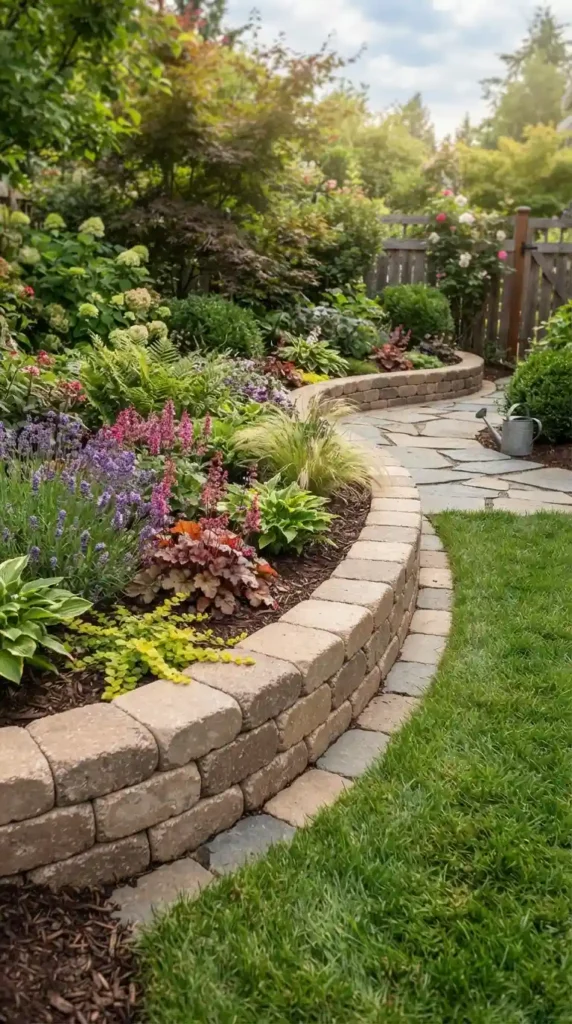
Stack interlocking pavers securely to create a sturdy raised edge without appearing bulky. This design works especially well on sloped yards where additional support helps prevent erosion and soil movement after rainfall.
4. Cobblestone Paver Edging for Classic Charm
Cobblestone edging introduces rich texture and timeless character to outdoor spaces. Its naturally uneven appearance blends beautifully with cottage gardens, traditional homes, and landscapes featuring mature trees and colorful perennial flowers.
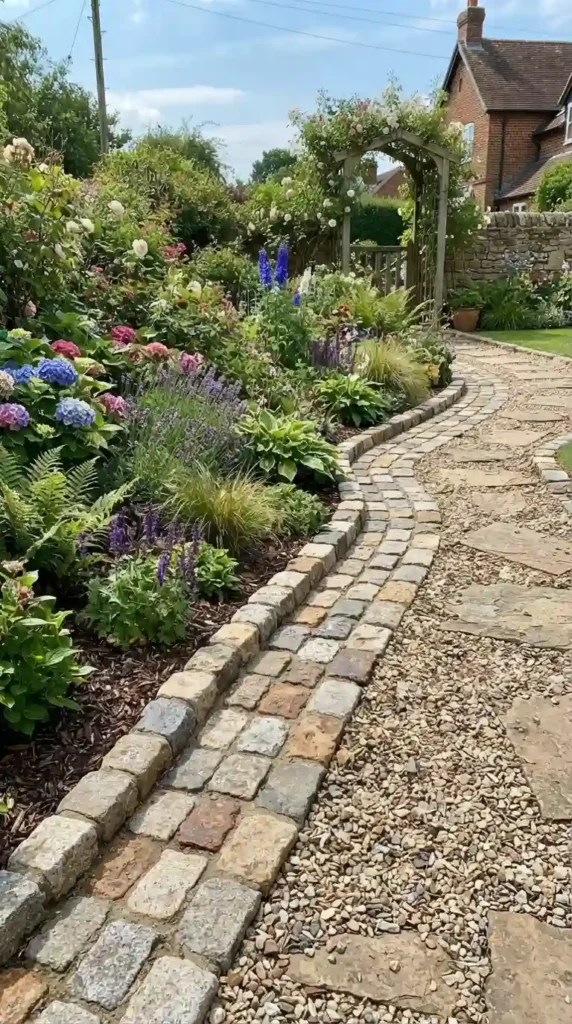
The durable stones withstand changing weather conditions while maintaining their attractive appearance for years. Their solid construction creates dependable borders that reduce grass invasion and improve the overall organization of planting areas.
5. Modern Concrete Paver Edging
Concrete pavers provide sleek lines that perfectly match contemporary landscaping styles. Their simple appearance creates strong visual contrast against green lawns while giving outdoor spaces a fresh, organized, and sophisticated finish.
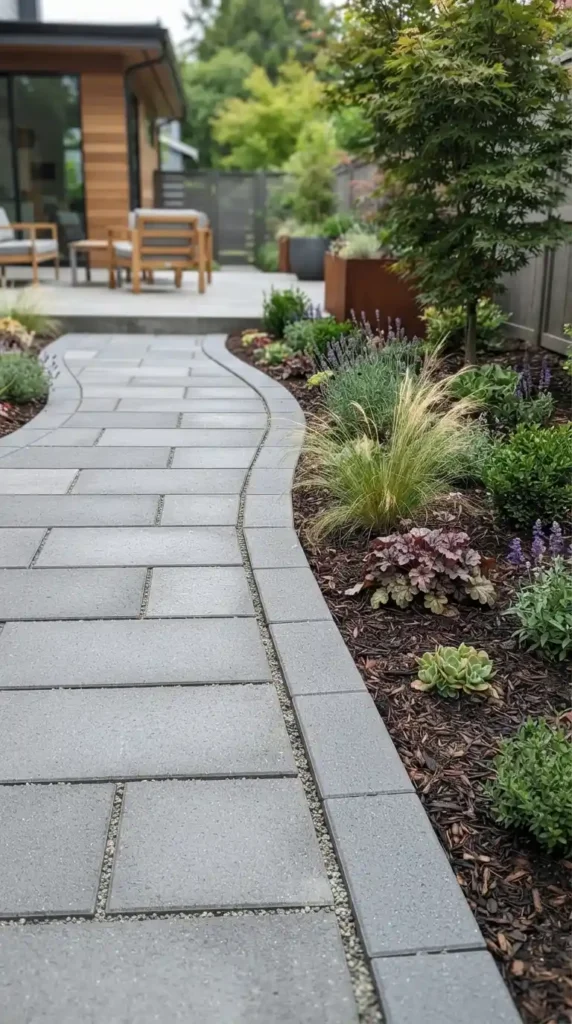
Available in multiple sizes and neutral colors, these pavers fit many landscape designs. Their durability resists cracking and fading, making them a reliable choice for busy yards requiring low-maintenance borders.
6. Basket Weave Paver Border Design
A basket weave pattern adds visual interest through its unique arrangement of rectangular pavers. This decorative style transforms ordinary edging into an eye-catching feature that enhances pathways, patios, and surrounding planting beds.
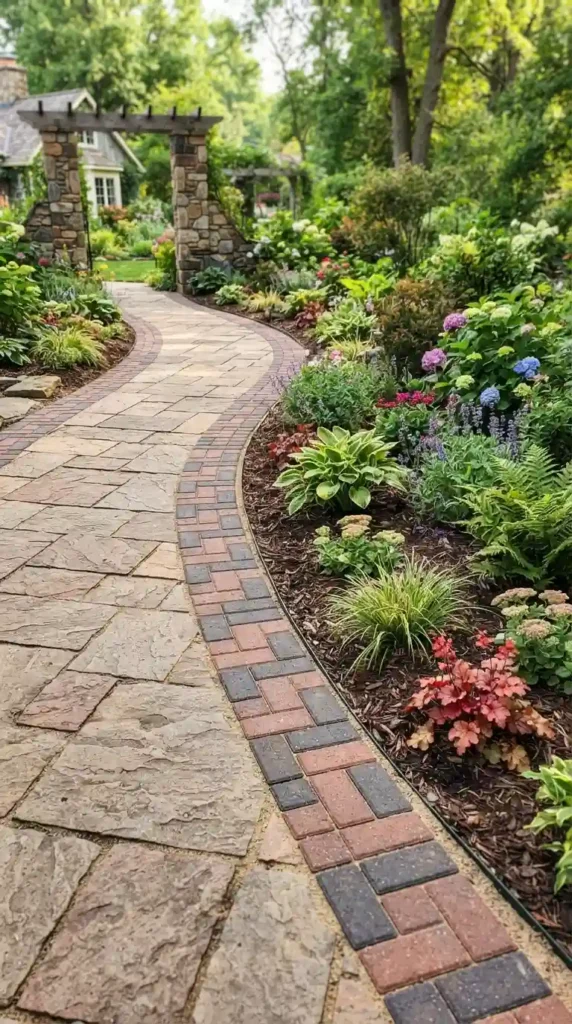
Careful placement creates balanced symmetry while maintaining structural strength. The textured pattern complements traditional architecture and provides a handcrafted appearance that makes the landscape feel thoughtfully designed and professionally finished.
7. Natural Stone and Paver Combination
Combining natural stone with pavers creates layered texture and unique visual contrast. The mixture blends structured design with organic elements, producing borders that feel balanced, welcoming, and connected to the surrounding landscape.
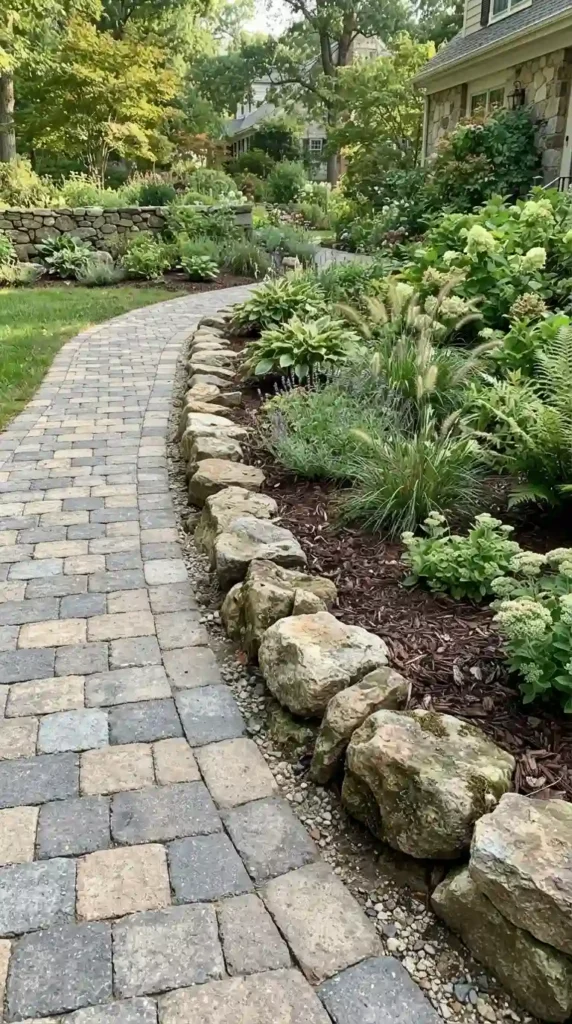
Mix complementary colors and similar heights for a cohesive appearance without overwhelming the garden. This creative combination suits rustic, woodland, and transitional landscapes while adding lasting character to outdoor living spaces.
8. Double Row Paver Edging
A double row border creates a bold landscape edge with extra depth and definition. The wider design makes flower beds stand out while providing stronger separation between grass, mulch, and decorative pathways.
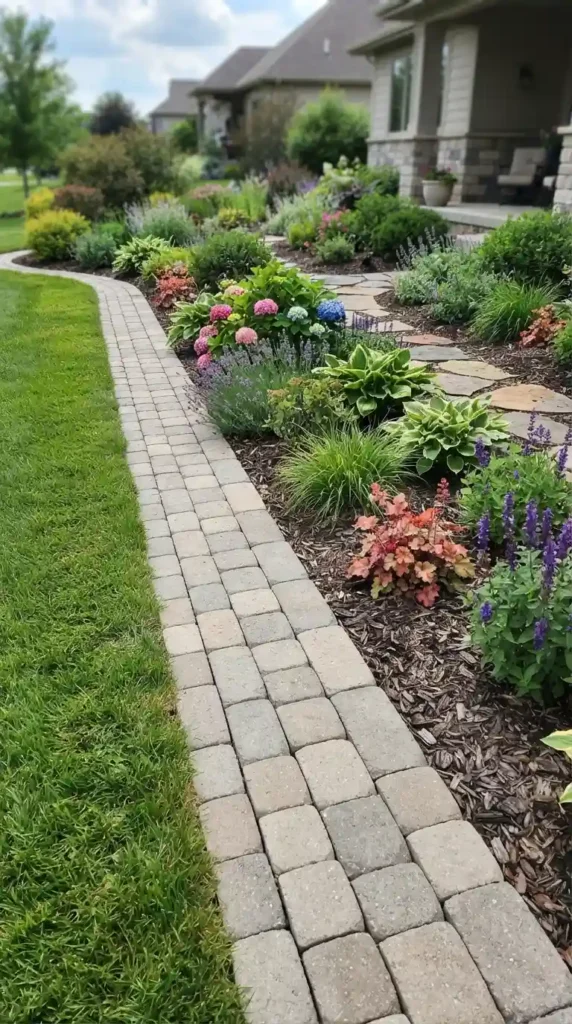
Using two rows also increases border durability by improving stability against movement. This layout works well in larger yards where wider edging enhances proportion and gives landscaping a professionally finished appearance.
9. Vertical Soldier Course Paver Edging
Standing pavers vertically creates a striking border with added height and definition. This design establishes clear boundaries around gardens while offering a modern architectural appearance that complements structured outdoor spaces.
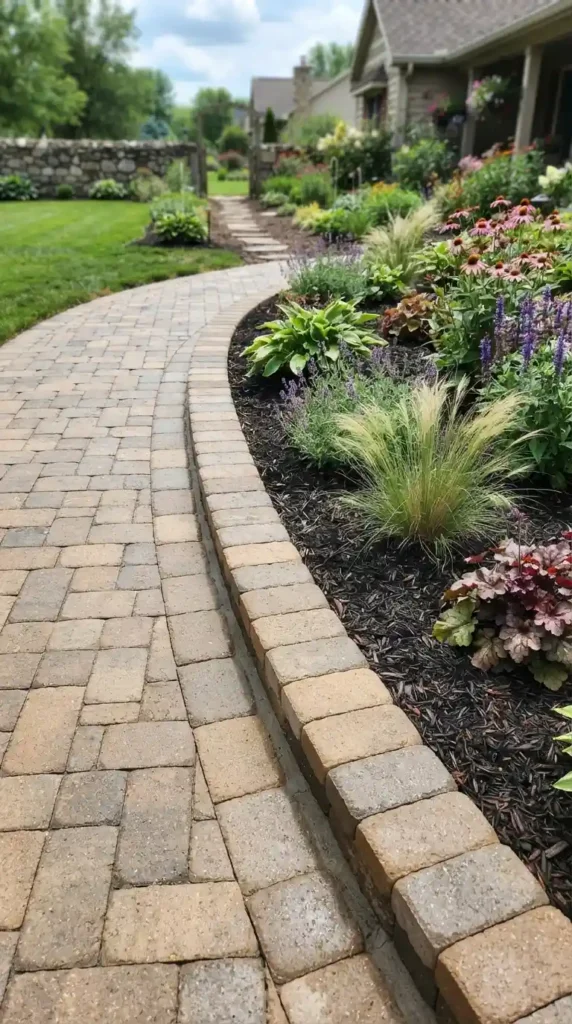
Vertical installation requires proper trench preparation for lasting support and alignment. Once secured, the border effectively holds mulch in place while creating an elegant edge that attracts attention without overwhelming nearby plants.
10. Circular Paver Edging Around Trees
Circular paver borders frame mature trees beautifully while protecting trunks from lawn equipment. The defined edge creates space for mulch, decorative stones, or shade-loving plants that thrive beneath broad tree canopies.
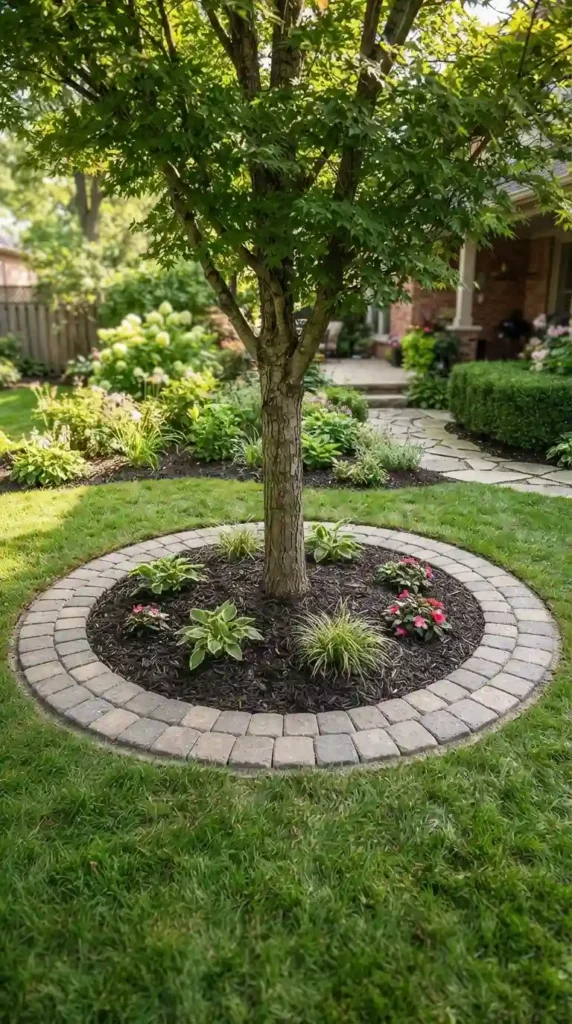
Maintain enough distance from the trunk to support healthy root growth. These paver edging ideas improve maintenance, reduce accidental damage, and transform ordinary trees into attractive focal points within the landscape.
11. Paver Edging with Decorative Gravel
Pairing pavers with decorative gravel creates a clean, low-maintenance landscape border. The contrasting materials improve drainage while providing attractive texture that complements modern gardens, xeriscapes, and minimalist outdoor designs.
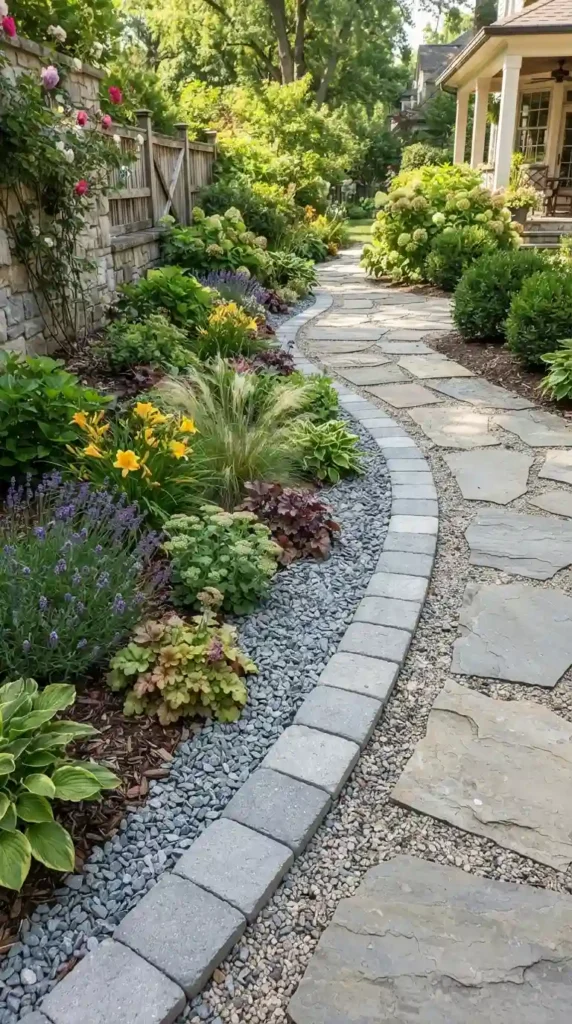
Choose gravel colors that coordinate with surrounding hardscape materials for visual harmony. This combination discourages weed growth, minimizes mud, and creates crisp transitions between planting areas and walkways throughout the property.
12. Herringbone Paver Border
A herringbone pattern introduces energy and movement through its angled arrangement. This classic design strengthens the border while creating visual detail that enhances patios, pathways, and surrounding landscape features without excessive decoration.
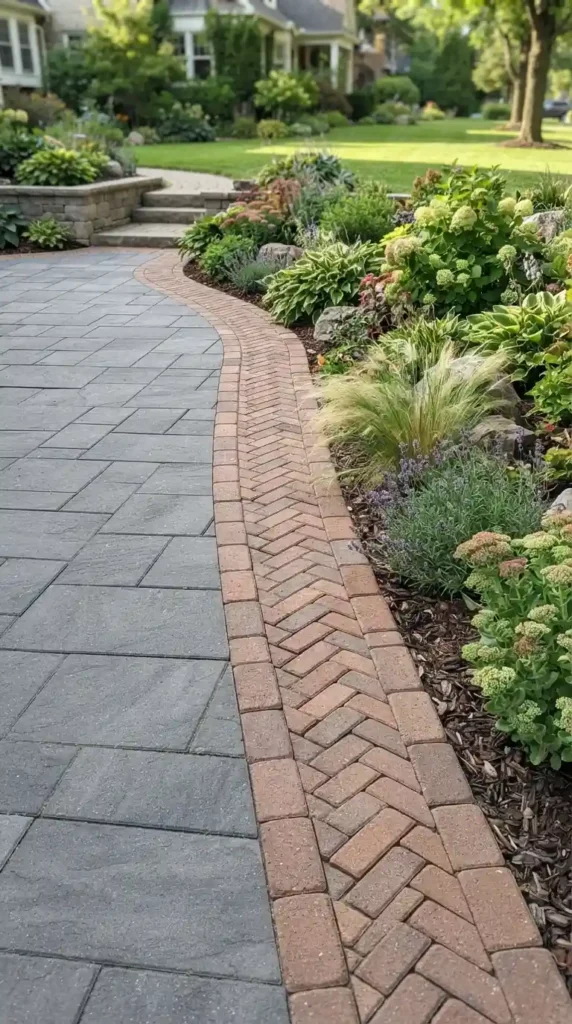
The interlocking layout improves resistance against shifting under changing weather conditions. Its distinctive appearance brings craftsmanship and elegance while maintaining practical performance in both residential gardens and high-traffic outdoor spaces.
13. Rustic Tumbled Paver Edging
Tumbled pavers feature weathered edges that create a naturally aged appearance. Their warm texture blends effortlessly with cottage gardens, farmhouse landscapes, and outdoor spaces designed for relaxed, welcoming comfort.
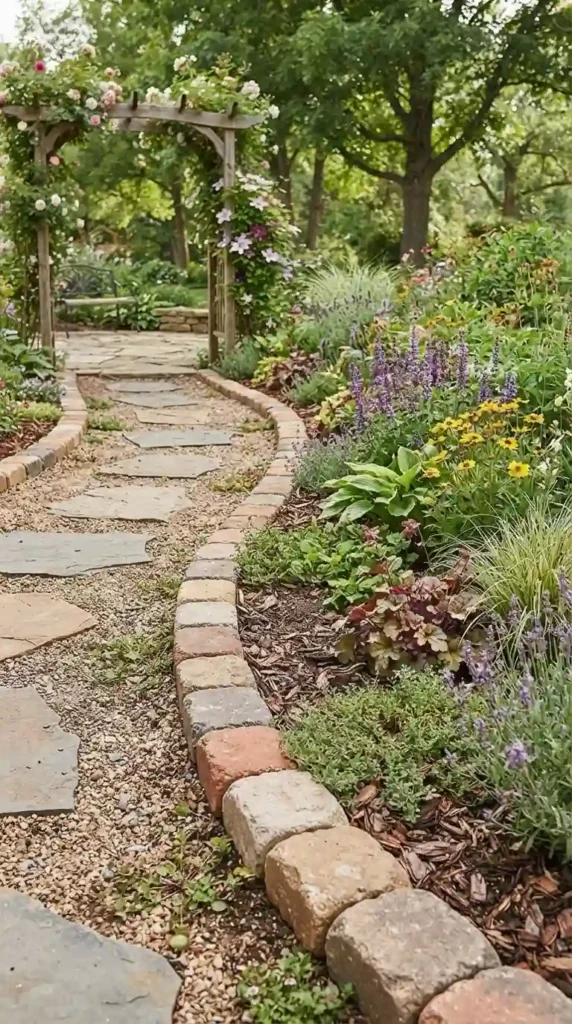
Soft color variations add character while hiding minor dirt and wear over time. These durable borders remain attractive through changing seasons and complement flowering plants, shrubs, and vintage-inspired garden accessories beautifully.
14. Mixed Color Paver Edging
Using multiple paver shades creates subtle variation that brings life to simple landscape borders. Carefully blended colors provide depth without appearing overly busy, making gardens feel more natural and visually balanced.
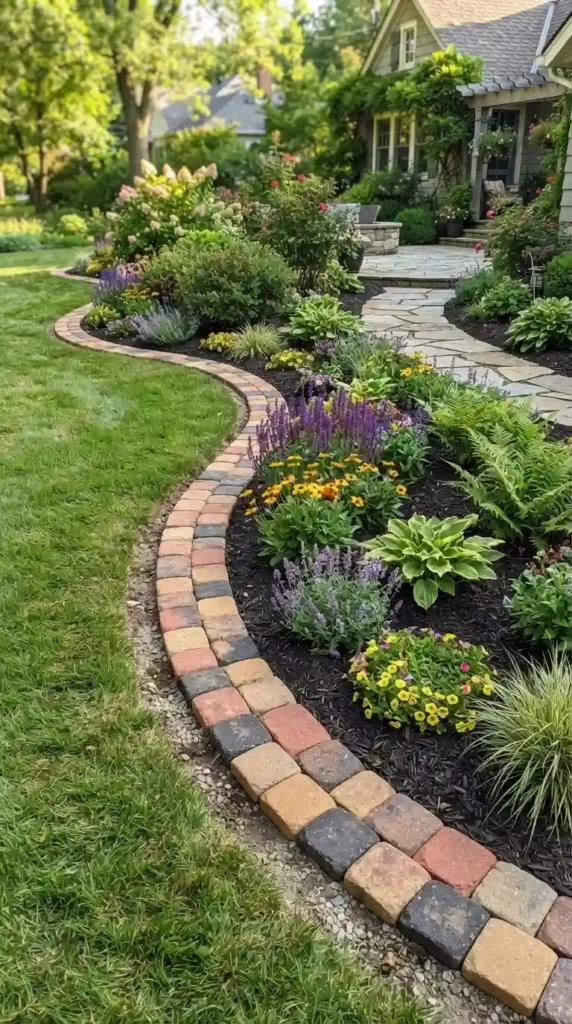
Coordinate tones with existing patios, driveways, or home exteriors for a unified design. This approach adds personality while maintaining a polished appearance that enhances curb appeal throughout every season.
15. Wide Paver Edging for Large Landscapes
Wide paver borders create impressive definition around expansive lawns and oversized planting beds. The generous width emphasizes landscape features while delivering a substantial, high-end appearance that suits spacious outdoor properties.
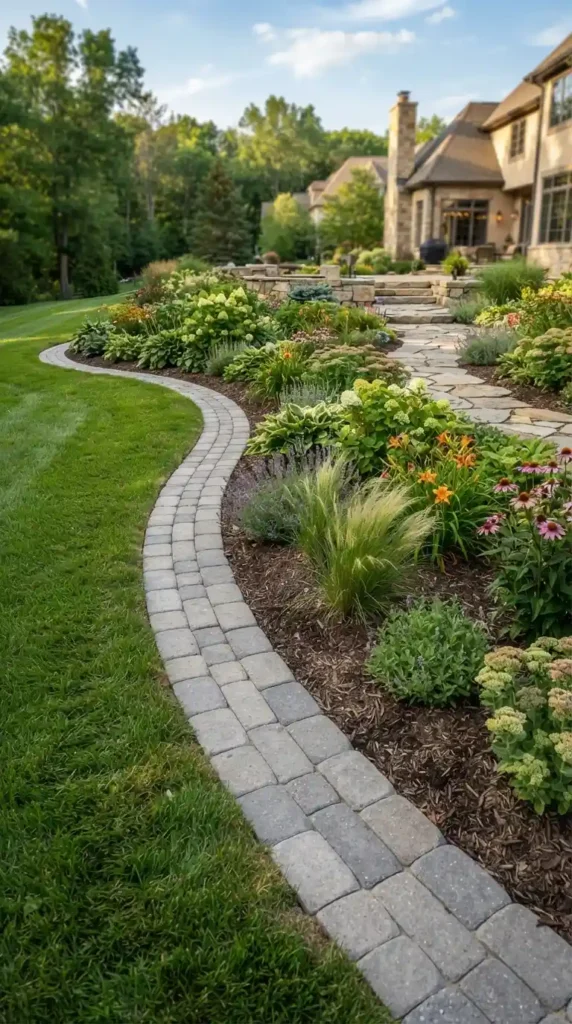
Extra-wide edging also provides comfortable footing during garden maintenance tasks. Its practical design protects nearby plants, contains mulch effectively, and creates bold visual separation between different landscape zones with lasting durability.
16. Illuminated Paver Edging with Landscape Lighting
Integrating low-voltage lighting into paver borders enhances both beauty and nighttime safety. Soft illumination highlights pathways, flower beds, and architectural features while creating an inviting atmosphere for evening outdoor gatherings.
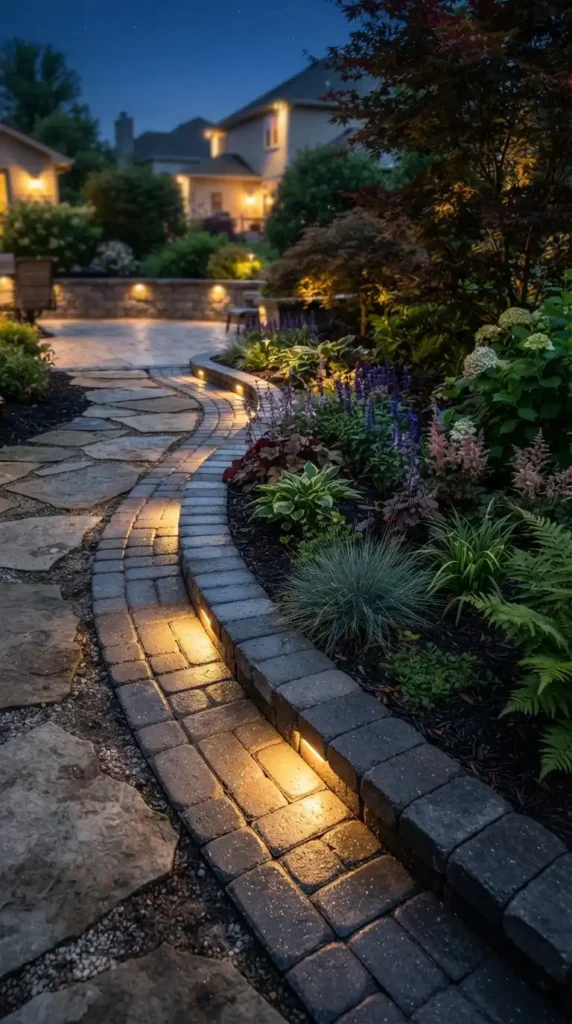
Position lights evenly in these paver edging ideas to avoid harsh shadows and maintain consistent brightness across the border. This combination improves visibility, showcases landscaping after sunset, and gives the entire yard a refined, luxurious appearance.
How to Maintain Paver Edging Throughout the Year
Regular care keeps paver edging strong, clean, and attractive all year. Simple seasonal maintenance helps prevent shifting, weeds, and costly repairs.
- Check the edging each season and reset any loose or uneven pavers before the damage spreads.
- Pull weeds and remove debris regularly to keep the border neat and prevent root damage.
- Refill joint sand when needed to improve stability and reduce weed growth.
- Sweep or rinse the edging gently to remove dirt without disturbing the pavers.
- Ensure proper drainage so water does not wash away the base or cause shifting.
What Tools You Need to Install Paver Borders
Installing paver borders is much easier when you have the right basic tools ready. These tools help you measure accurately, dig properly, and set the borders neatly for a clean and stable finish.
- Measuring Tape and String Line: Helps you mark straight, even lines and keep the border layout accurate.
- Shovel or Edging Spade: Used to dig the trench and remove soil or grass where the pavers will be placed.
- Rubber Mallet: Lets you gently tap pavers into place without cracking or damaging them.
- Level: Ensures the border stays flat and even for a clean, professional look.
- Paver Cutter or Saw: Used to cut pavers neatly to fit corners and edges properly.
Conclusion
Well-designed borders bring structure, balance, and lasting beauty to outdoor spaces. These paver edging ideas show how simple edging can improve organization, control plant growth, and enhance the overall landscape without complex changes.
Using these design approaches helps create cleaner, more defined garden areas that feel polished and intentional. Thoughtful planning turns any yard into a more attractive and functional space with long-lasting curb appeal.