15 Creative Pet Friendly Backyard Designs for Safe Outdoor Living
Pets need a safe outdoor space where they can play, rest, and explore without danger. Poor layouts, harmful plants, and rough surfaces can create problems instead of comfort for your furry companions.
Simple changes can make any yard more enjoyable for both pets and people. Pet Friendly Backyard Designs help create secure spaces that support daily exercise, reduce stress, and encourage healthy outdoor activities.
This collection shares creative ideas that improve safety while keeping your backyard beautiful and practical. You can build a welcoming space where dogs and cats stay happy, active, and comfortable throughout every season.
How to Plan a Pet Friendly Backyard Before Spending Any Money
The most expensive pet backyard mistakes happen when purchases precede planning. A dog run installed before observing where the dog naturally patrols gets ignored. A water feature installed without considering drainage creates a muddy problem. Thirty minutes of planning prevents months of frustration.
Step 1: Observe Your Pet for One Week Before Buying Anything:
Watch where your dog walks repeatedly. That’s where the path goes. Watch where they dig. That’s where the digging zone goes. Watch where they rest naturally. That’s where the shade structure goes. Your pet has already designed the optimal layout. You’re just formalizing it.
Step 2: Identify Existing Hazards Before Adding New Features:
Walk the yard at pet height. Literally crouch down and look at the space from 12 to 18 inches off the ground. Sharp edges, toxic plants, fence gaps, and chemical storage all become visible from this perspective because standing height inspection misses them.
Step 3: Prioritize Safety Over Aesthetics:
Establish the safety foundation first. Install fencing, remove toxic plants, and secure hazardous material storage before spending on enrichment features like agility equipment or water features. A beautiful backyard with a gap under the fence is not a pet friendly backyard.
Step 4: Plan for Maintenance, Not Just Installation:
Every backyard feature requires ongoing care. Water stations need daily cleaning. Artificial turf needs weekly disinfecting. Natural grass needs regular watering. Build only what you’ll realistically maintain. A neglected pet feature creates problems rather than solving them.
Step 5: Budget by Priority, Not By Appeal:
Fencing comes first regardless of cost. Toxic plant removal comes second. Everything else is an enhancement. Many pet owners spend on appealing features like agility courses and splash pads while leaving fundamental safety issues unaddressed.
15 Creative Pet Friendly Backyard Designs Every Dog and Cat Will Love
A well-planned backyard gives pets a safe and enjoyable place to play, explore, and relax every day. These pet friendly backyard design ideas will inspire you to build a beautiful outdoor area that is fun, functional, and safe.
1. Secure Fenced Play Area
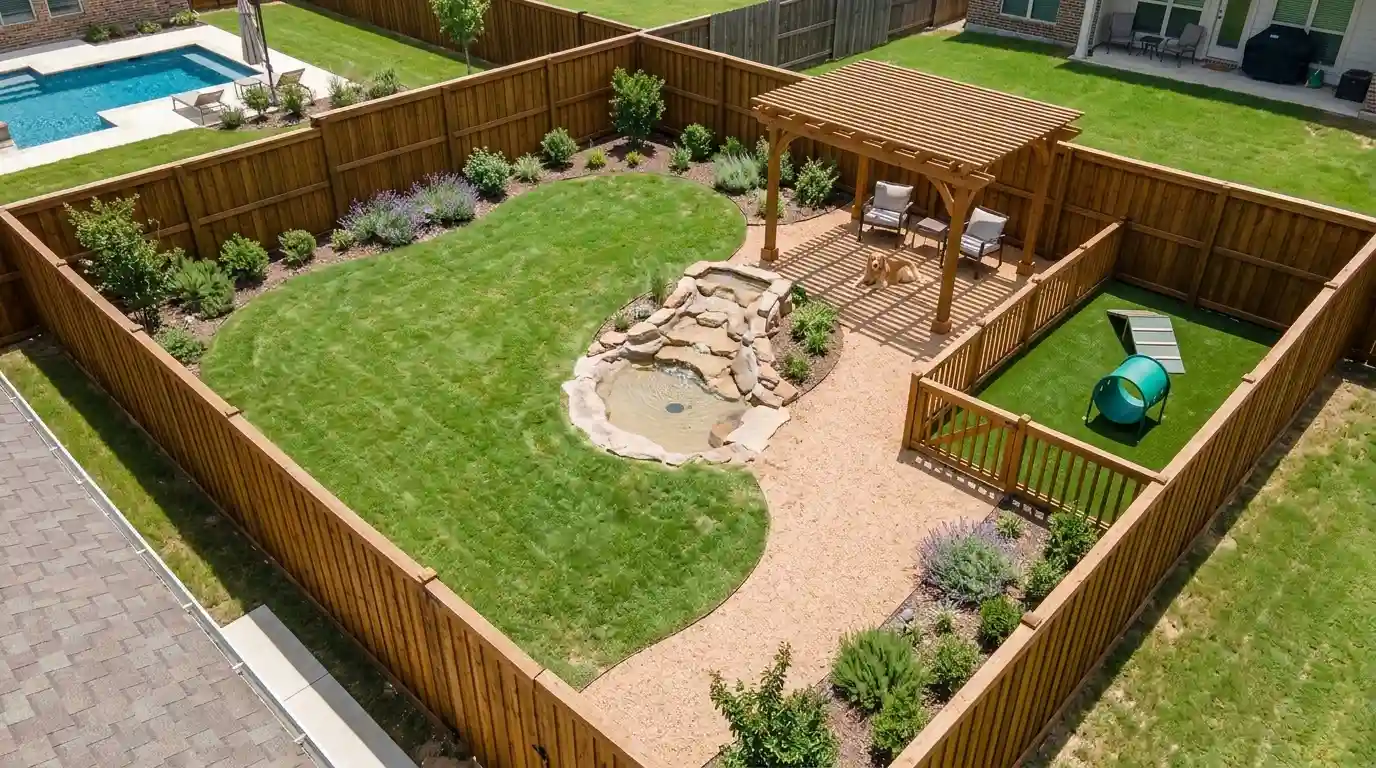
A strong fence creates the foundation of a pet-safe backyard by preventing unexpected escapes. Choose smooth materials without sharp edges and check regularly for gaps beneath the fence where curious pets could dig or squeeze through safely.
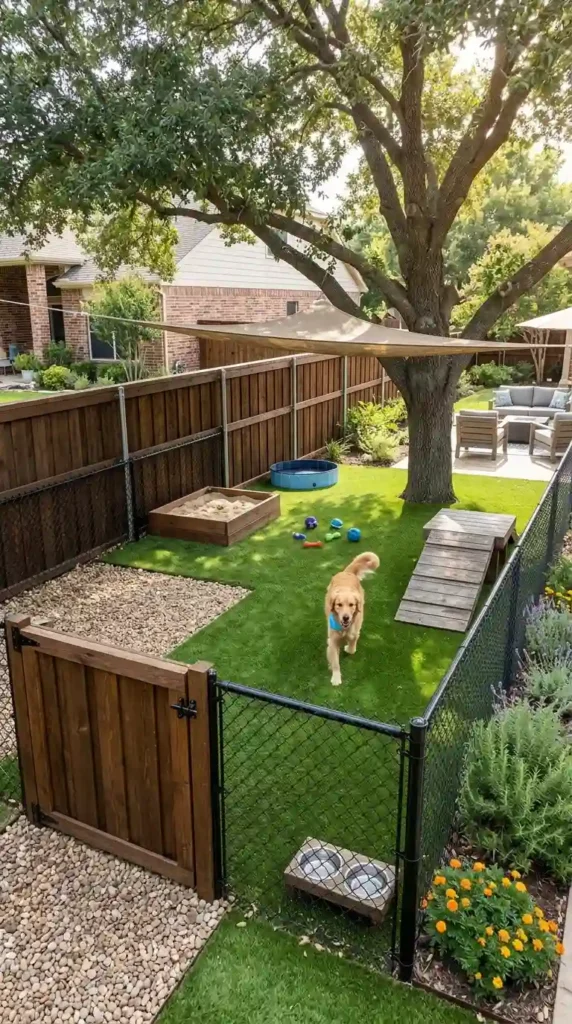
Add a soft grass section or pet-friendly ground cover inside the fenced space to encourage active play. Include shaded corners and fresh water stations so pets remain comfortable while spending extended time outdoors during warm afternoons.
2. Pet-Safe Garden Plants
Replace toxic flowers and shrubs with pet-friendly plants that support Pet Friendly Backyard Designs. Choose durable varieties with colorful blooms that handle occasional digging without creating health risks for curious pets.
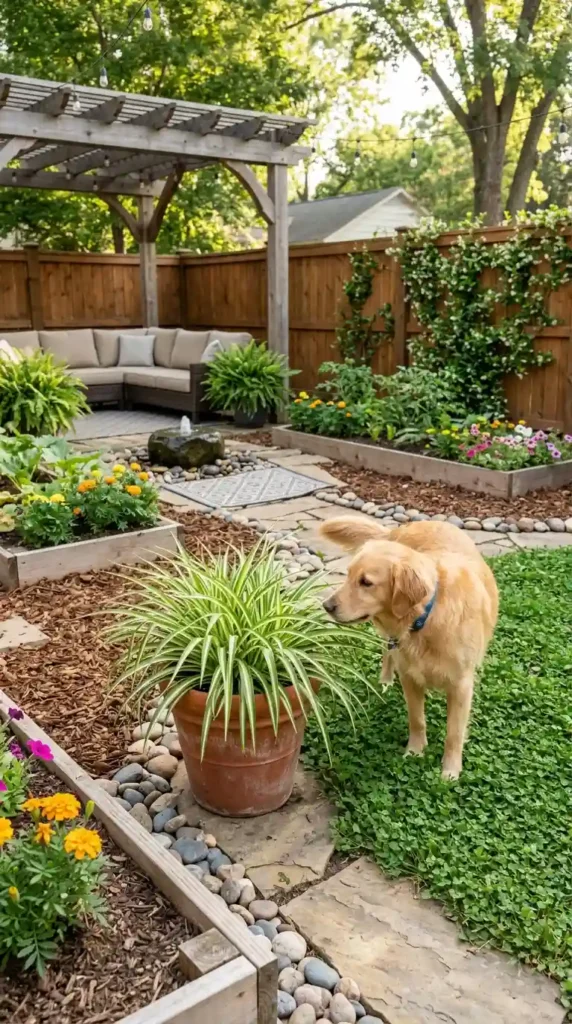
Arrange plants inside raised beds or decorative borders to protect delicate roots from playful paws. Mulch with pet-safe materials instead of cocoa mulch, creating a neat landscape that stays attractive while supporting healthy outdoor exploration every day.
3. Comfortable Shaded Retreat
Create shaded resting spaces using pergolas, shade sails, or large trees to help pets cool down naturally. These protected areas reduce heat exposure and provide relaxing spots where animals can nap after energetic outdoor activities throughout sunny days.
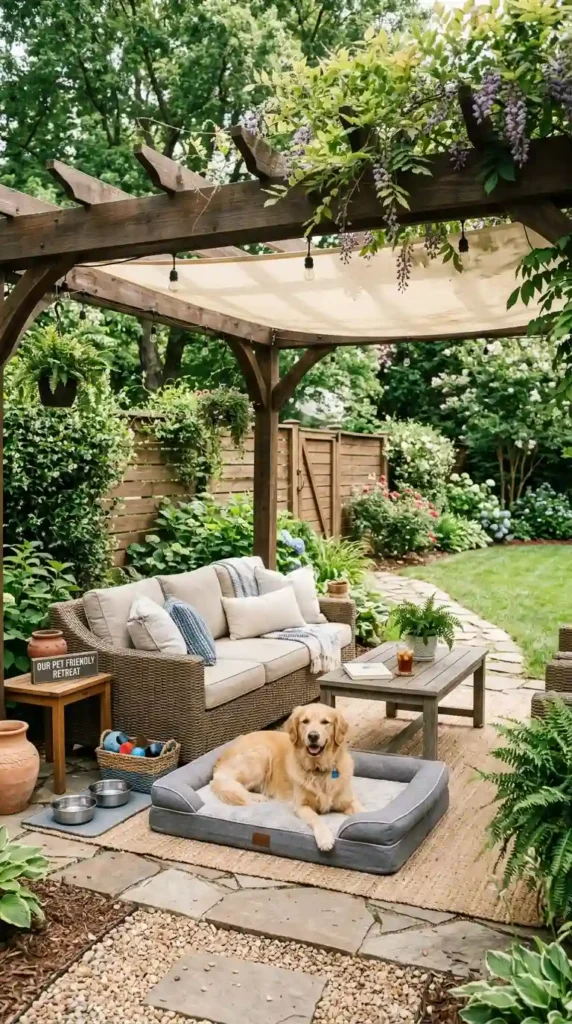
Place weather-resistant pet beds or cooling mats beneath the shade to improve comfort. Adding gentle airflow with open landscaping helps maintain pleasant temperatures while giving pets an inviting place to relax beside family members outside.
4. Soft and Durable Ground Cover
Hard concrete surfaces can become uncomfortable during hot weather and rough on sensitive paws. Choose natural grass, artificial turf, or smooth mulch that cushions movement while making outdoor play safer for energetic pets of every size.
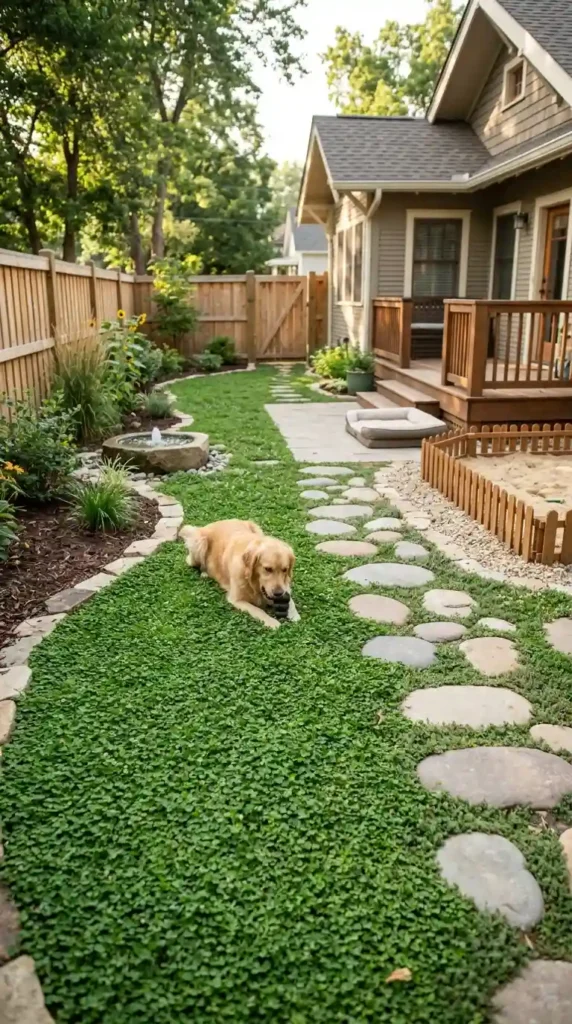
Mix different textures throughout the yard to create visual interest without sacrificing safety. Durable surfaces also simplify cleaning after rain while reducing muddy footprints that often travel inside the home after outdoor adventures.
5. Backyard Agility Course
Build a simple agility area using tunnels, ramps, stepping platforms, and weave poles for daily exercise. Interactive obstacles encourage physical movement while strengthening confidence, coordination, and communication between pets and their owners during playtime.
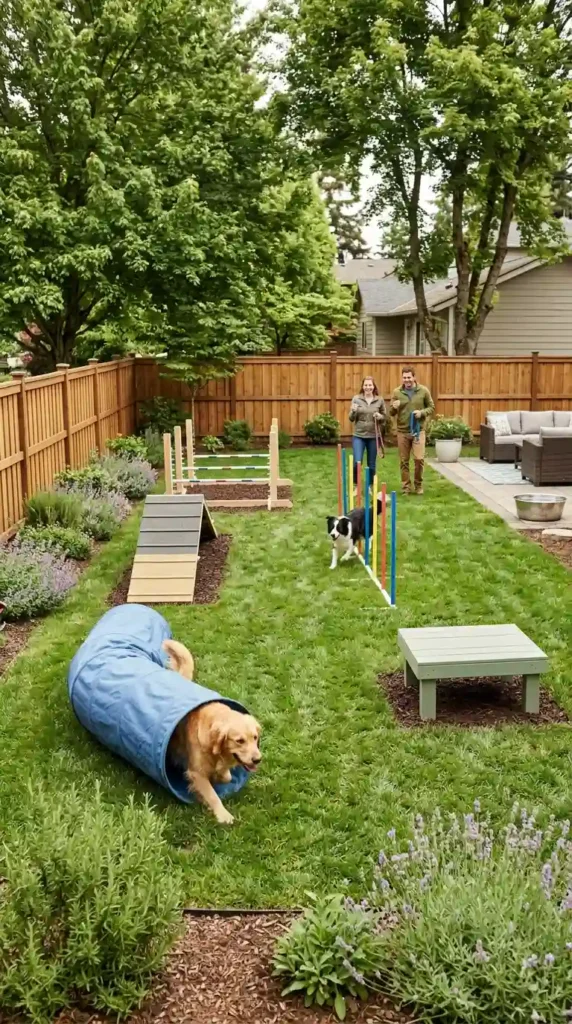
Design equipment with rounded edges and stable construction to reduce injury risks. Rearrange obstacles occasionally to keep activities exciting while providing fresh challenges that prevent boredom and encourage healthy mental stimulation every week.
6. Digging Zone for Curious Pets
Some dogs naturally enjoy digging, making designated digging areas an excellent solution. Fill a sandbox with clean sand where pets can safely satisfy natural instincts without damaging flower beds or carefully maintained landscaping around the yard.
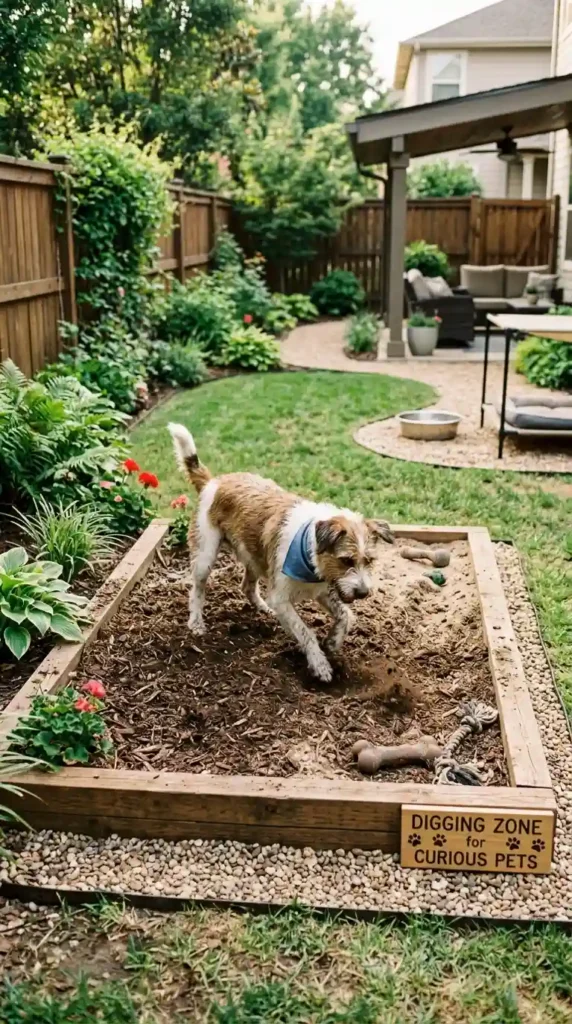
Hide toys or treats beneath the sand to increase excitement during supervised play sessions. This dedicated area redirects unwanted digging habits while protecting the rest of your outdoor space from frequent holes and disturbed plants.
7. Safe Water Play Corner
Install a shallow splash pad or small pet fountain where animals can cool off safely during warm weather. Gentle water features encourage hydration while adding enjoyable entertainment that keeps energetic pets active without deep water hazards.
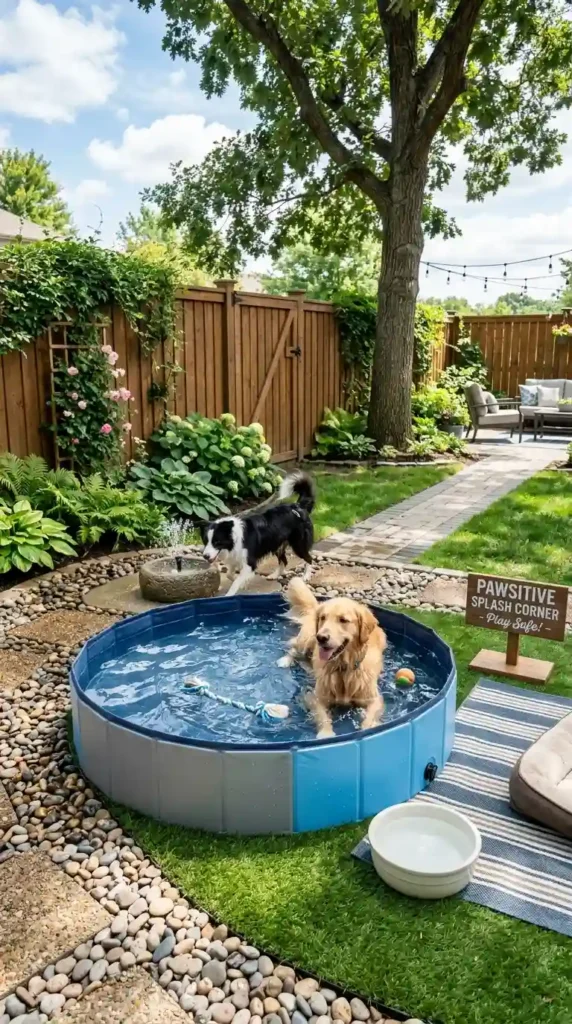
Choose slip-resistant surfaces surrounding the water feature to improve stability during play. Regular cleaning prevents algae buildup while maintaining fresh water that supports healthy outdoor fun throughout the hottest months of the year.
8. Cozy Outdoor Pet Lounge
Design a relaxing outdoor lounge with weatherproof pet beds, blankets, and sheltered seating. Comfortable resting spaces encourage pets to stay nearby while families enjoy outdoor meals, conversations, or quiet evenings in the backyard together.
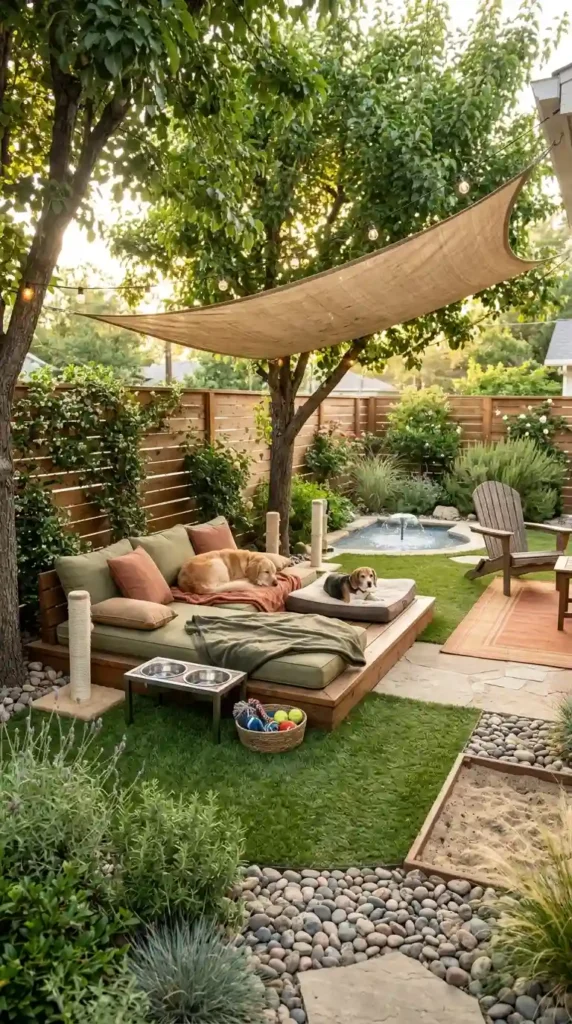
Position the lounge where pets can observe their surroundings without feeling isolated. Combining comfort with visibility helps reduce anxiety while giving animals a familiar place to rest whenever outdoor activities become overwhelming or tiring.
9. Natural Walking Paths
Curved walking paths encourage gentle exploration while protecting grass from excessive wear. Use smooth stone, gravel alternatives, or compact pathways that remain comfortable under paws and blend beautifully with the surrounding landscape throughout every season.
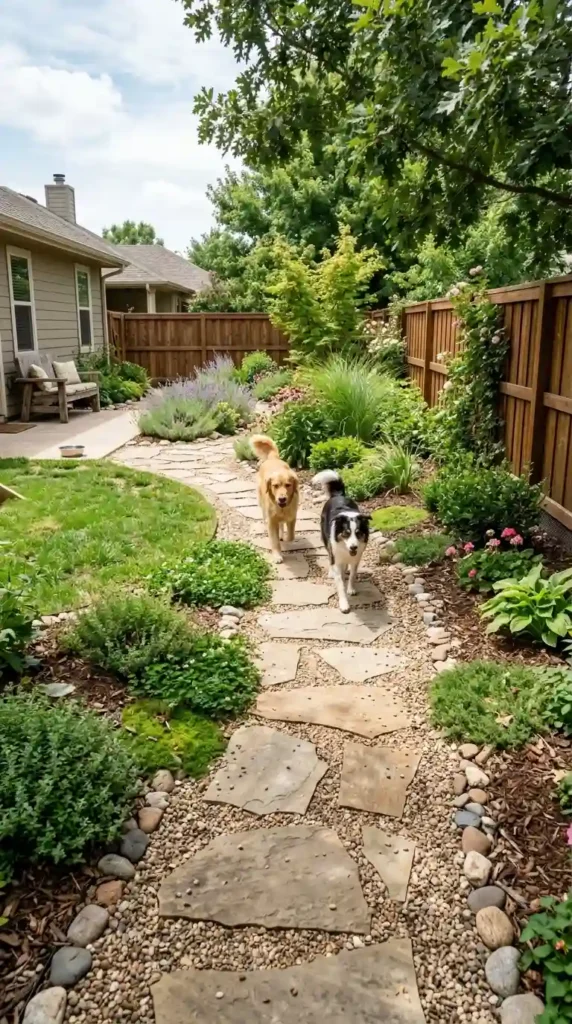
Connect paths to favorite resting areas, gardens, and play zones for easy movement. Thoughtful layouts make the backyard feel larger while encouraging pets to stay active through enjoyable daily walks around familiar outdoor surroundings.
10. Interactive Toy Station
Dedicate one backyard section to outdoor toys and enrichment activities that reduce boredom. Pet Friendly Backyard Designs encourage healthy play, regular exercise, and mental stimulation through rotating toys each week.
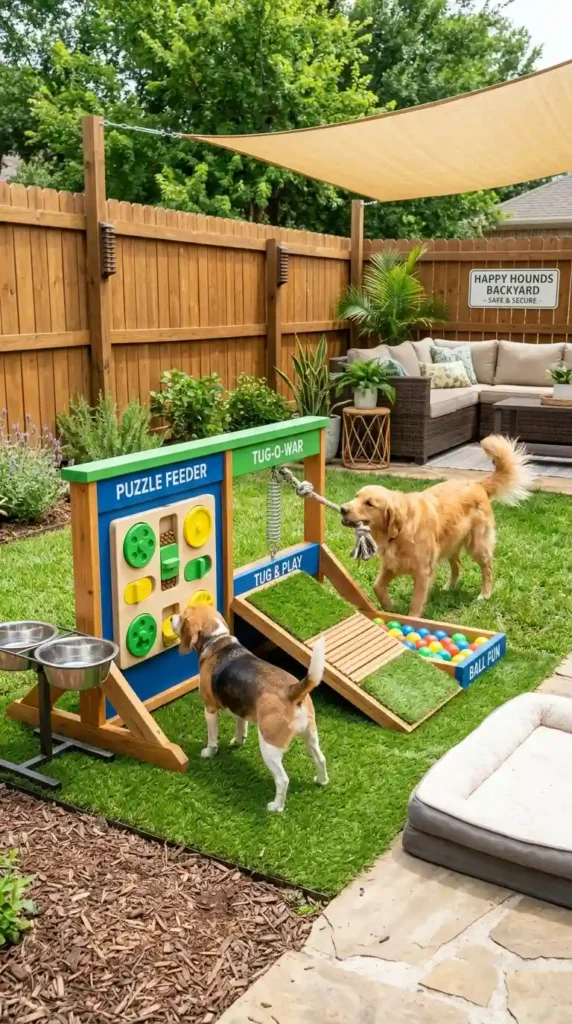
Store toys inside weather-resistant containers to protect them from rain and sunlight. Organized storage keeps the yard tidy while ensuring favorite balls, ropes, and puzzles remain clean and ready for spontaneous outdoor adventures.
11. Raised Garden Borders
Raised garden beds create clear boundaries between decorative landscaping and active pet areas. Elevated designs protect flowers, vegetables, and herbs while allowing homeowners to maintain attractive gardens without constantly repairing pet-related damage or disturbed soil.
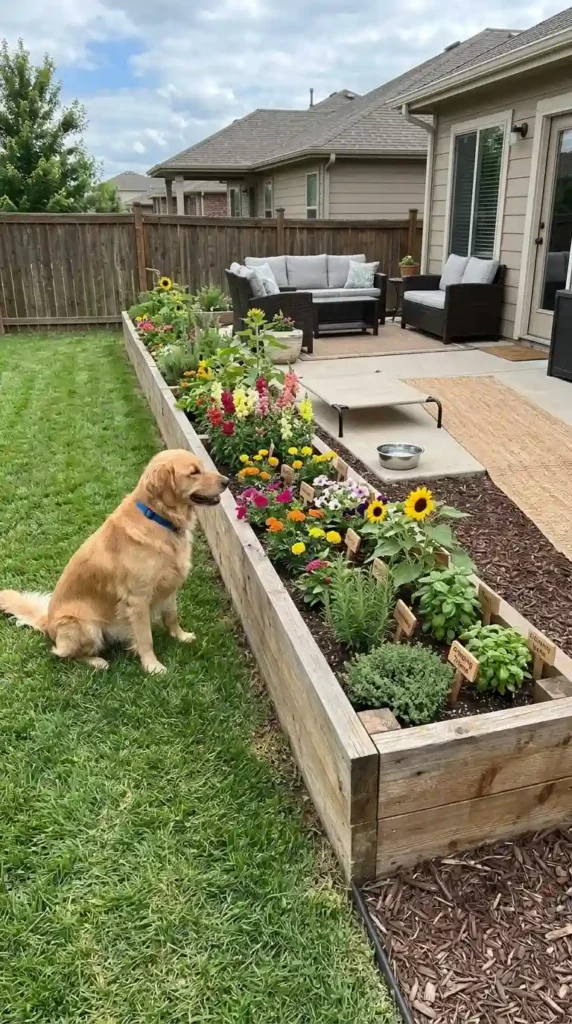
Construct borders using smooth wood or stone with rounded edges for additional safety. Decorative raised beds also improve drainage while adding attractive structure that enhances the backyard’s overall appearance and organization.
12. Quiet Relaxation Corner
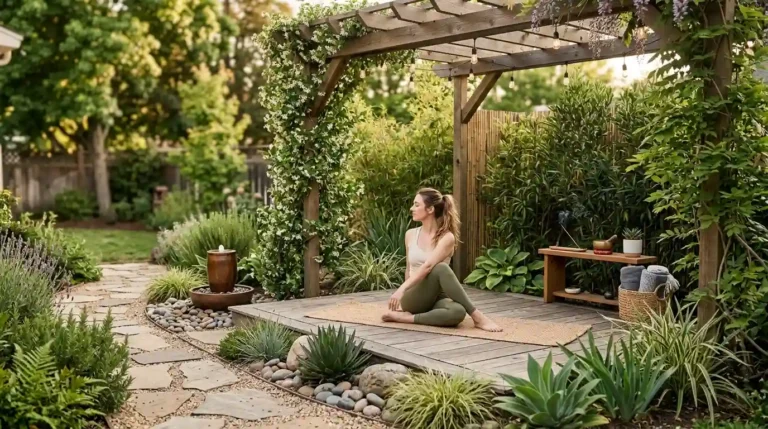
Some pets prefer peaceful spaces away from active family gatherings and loud noises. Create a secluded corner using ornamental grasses, privacy screens, or shrubs that provide comfort while reducing stress during busy outdoor events.
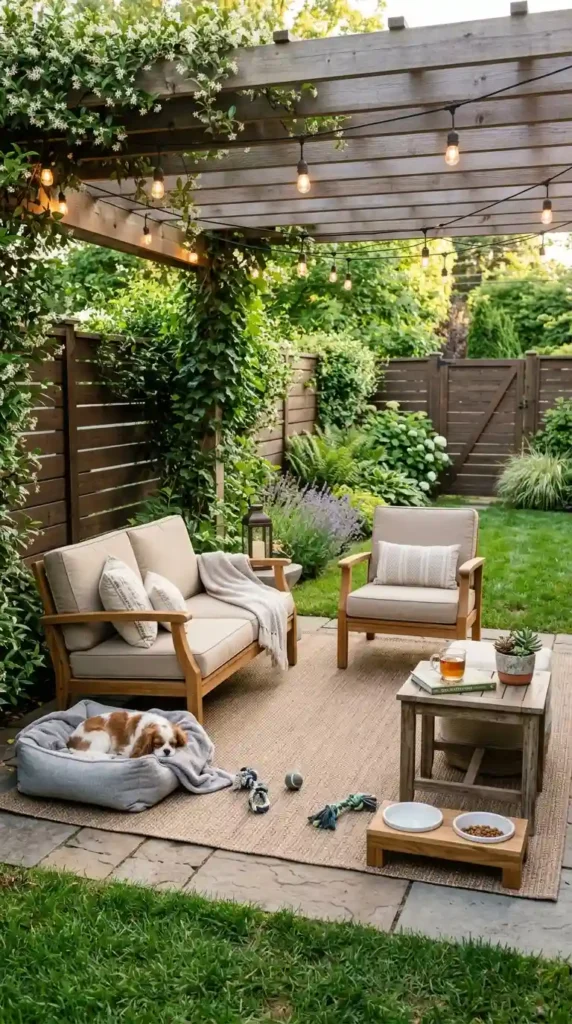
Include a soft resting mat and familiar toys inside the quiet area for reassurance. A calm retreat helps nervous pets feel secure while still remaining close enough to enjoy outdoor time with their family.
13. Covered Patio Hangout
Extend backyard enjoyment by creating a covered patio where pets stay protected from rain and strong sunlight. Sheltered outdoor living areas provide comfortable gathering spaces while allowing pets to remain close during family activities.
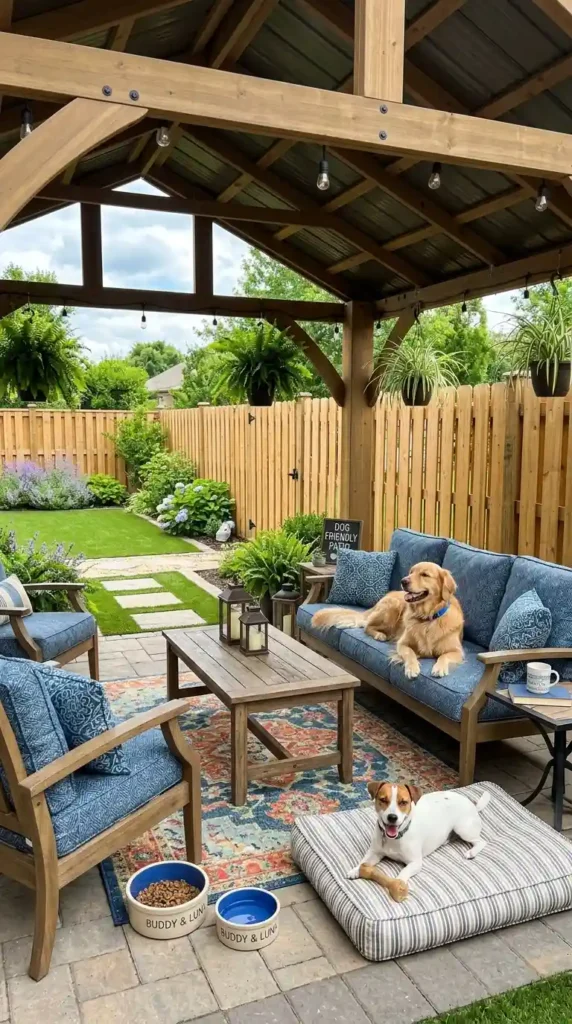
Choose durable furniture with washable fabrics that resist pet hair and muddy paws. Practical materials simplify maintenance while keeping the outdoor space attractive, comfortable, and welcoming throughout changing weather conditions every season.
14. Wildlife-Friendly Viewing Area
Create a safe observation zone where pets can watch birds and butterflies without chasing wildlife. Strategic fencing, decorative barriers, and thoughtful landscaping allow natural interactions while protecting both local animals and curious household pets.
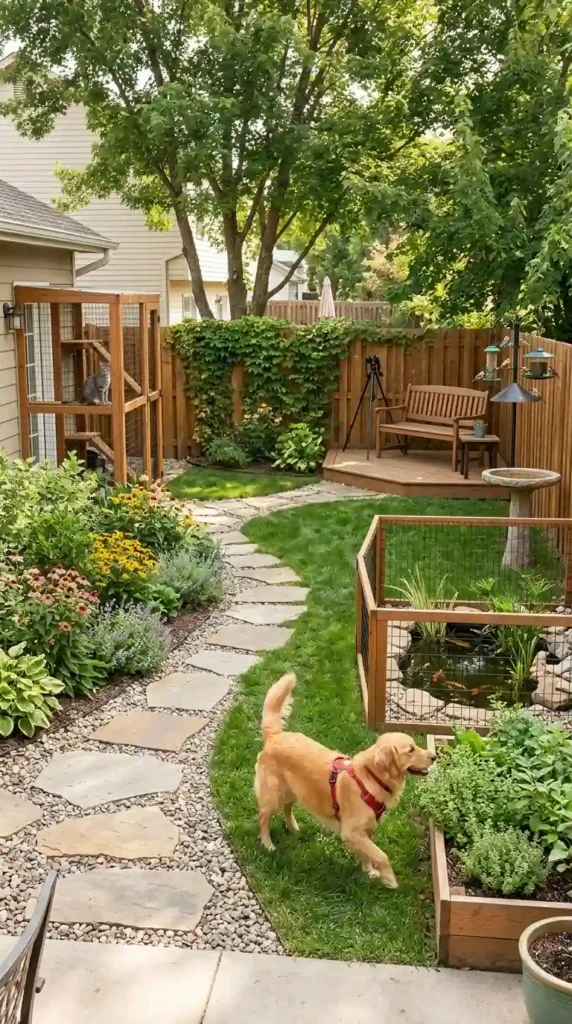
Position benches nearby so owners can supervise outdoor viewing experiences comfortably. This peaceful feature encourages calm behavior while providing enjoyable entertainment that stimulates pets through natural sights, sounds, and gentle environmental activity.
15. Outdoor Feeding and Hydration Station
Set up a dedicated feeding and watering station beneath a shaded structure to keep supplies organized. Elevated bowls reduce dirt contamination while encouraging regular hydration during active outdoor play sessions throughout warmer parts of the year.
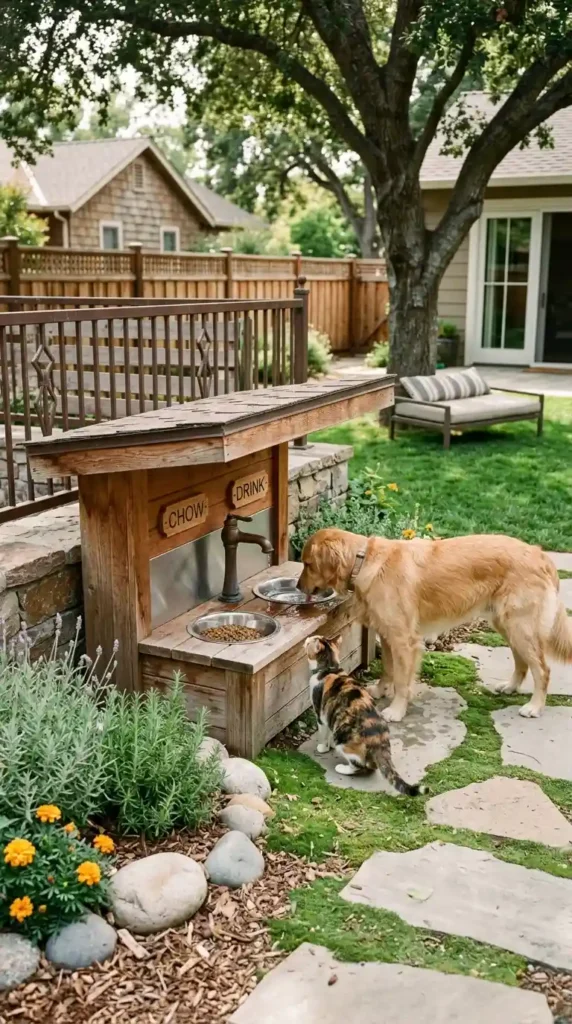
Clean bowls daily and replace water often to maintain proper hygiene outdoors. Organized feeding stations keep Pet Friendly Backyard Designs tidy while supporting healthy routines for pets and owners.
Check Your Yard Before Unsupervised Pet Time
A systematic safety test before your pet’s first unsupervised outdoor session prevents the most common and most preventable backyard emergencies.
- Fence Test: Walk every fence section carefully, checking for gaps, loose panels, digging spots, secure latches, and gates that fully self-close properly.
- Plant Test: Photograph every yard plant, then compare each one with the ASPCA toxic plant database before allowing your pet outside alone.
- Surface Temperature Test: Test every walking surface during afternoon heat using the seven-second hand method to identify dangerous areas causing painful paw burns.
- Chemical Audit: Inspect every shed, cabinet, and storage area, locking away fertilizers, pesticides, cleaners, and chemicals that could seriously harm curious pets.
- Water Hazard Test: Check every water feature deeper than six inches, ensuring your pet can safely enter, exit, and avoid accidental drowning risks.
- Small Space Entrapment Test: Inspect tight spaces beneath decks, fences, and storage areas, blocking openings where pets could become trapped or injured unexpectedly.
Conclusion
Before making changes, focus on safety, comfort, and easy maintenance. Small upgrades create lasting value, helping pets enjoy outdoor time while keeping your backyard attractive, practical, and welcoming.
Pet Friendly Backyard Designs make it easier to create a secure space where pets can play, relax, and stay active. Thoughtful planning brings lasting comfort for everyone.