15 Climbing Vegetables To Grow On A Trellis for Beginners
Many gardeners struggle with limited space and crowded garden beds. Growing plants upward solves this problem while improving airflow, making watering easier, and helping vegetables stay healthier throughout the season.
A simple trellis keeps plants off the ground, reduces disease risks, and makes harvesting faster. Vegetables To Grow On A Trellis also receive better sunlight, helping many varieties produce stronger and healthier crops.
Even beginners can build a productive garden without complicated tools or large spaces. The right climbing vegetables grow quickly, save valuable room, and create a neat garden that is easy to manage.
15 Best Vegetables To Grow On A Trellis for Bigger Harvests
Growing vegetables on a trellis is a simple way to save space while keeping your garden neat and productive. Climbing plants receive better airflow, more sunlight, and easier harvesting when they grow upward. Here are the best Vegetables To Grow On A Trellis for bigger harvests and a healthier garden.
1. Cucumbers
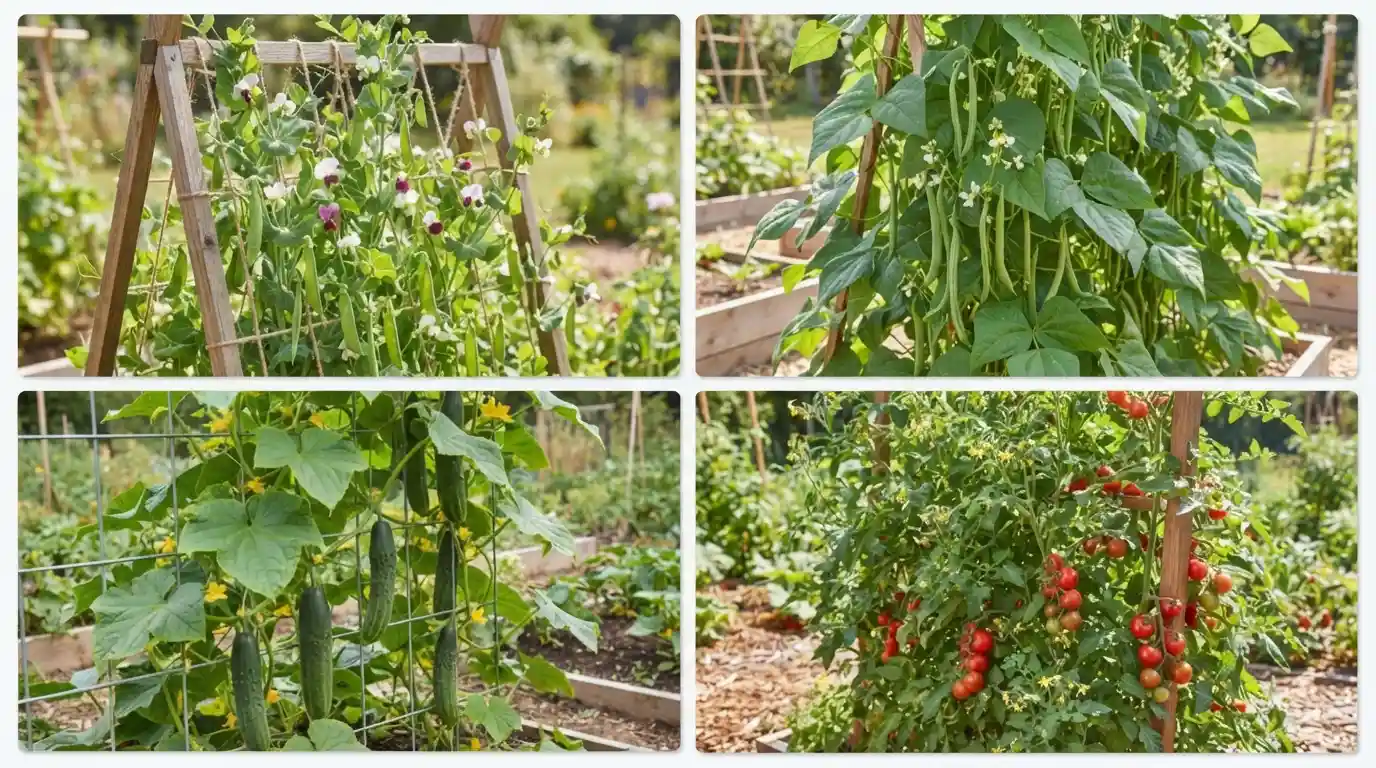
Cucumbers naturally climb with curling tendrils that grip trellis supports without much help. Growing them vertically saves valuable ground space, improves airflow, and keeps fruits cleaner while reducing problems caused by damp soil and overcrowding.
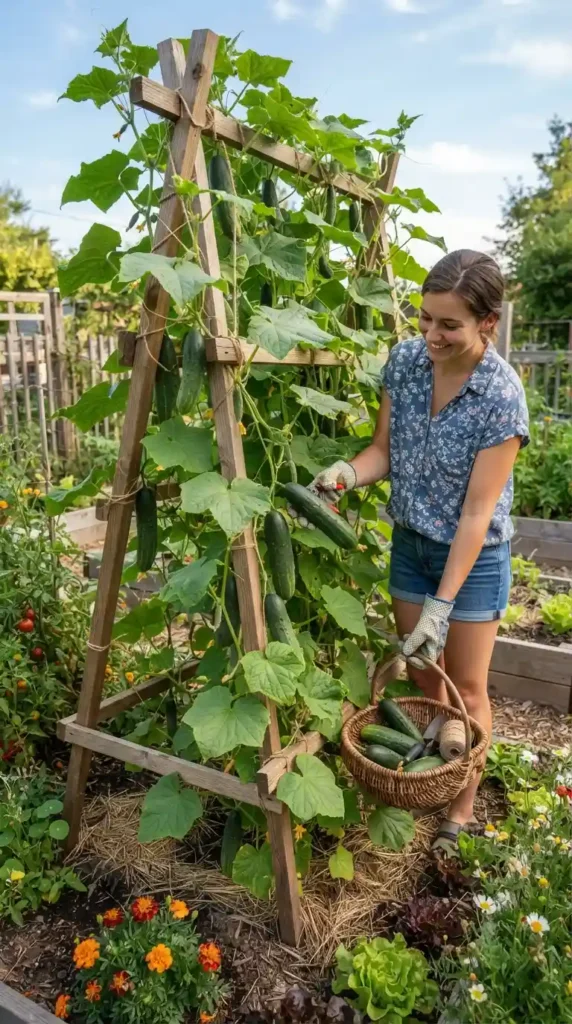
Harvesting becomes much easier because hanging cucumbers remain visible among the leaves. Strong support prevents vines from spreading across pathways, while better sunlight encourages steady growth and helps plants produce crisp, healthy fruits throughout summer.
2. Pole Beans
Pole beans grow rapidly and quickly cover a sturdy trellis with lush green vines. Their vertical habit allows gardeners to grow large harvests in compact spaces while keeping garden beds organized and easier to maintain.
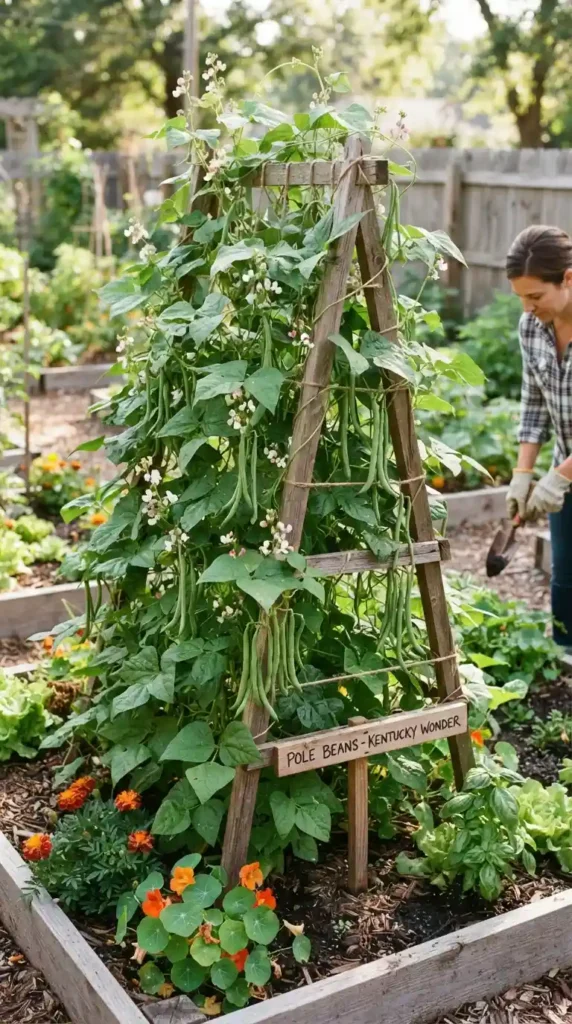
Regular picking encourages continuous bean production over many weeks. Climbing vines also improve air circulation around the foliage, lowering moisture buildup and helping plants stay productive during warm growing conditions with fewer common garden issues.
3. Peas
Peas enjoy climbing lightweight trellises using delicate tendrils that wrap naturally around supports. Vertical growth prevents tangled vines, keeps pods cleaner, and creates an attractive green wall that fits beautifully into small vegetable gardens.
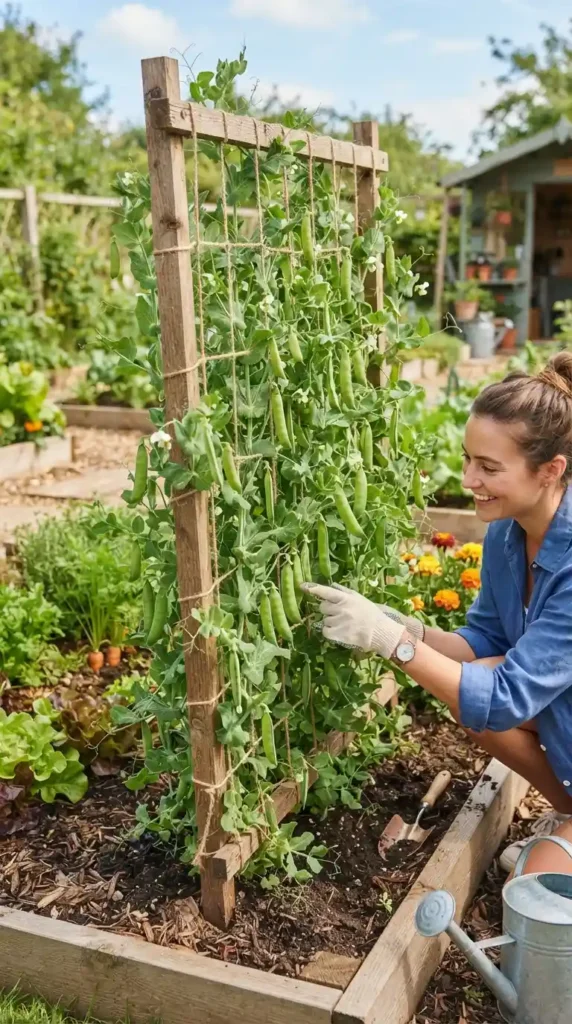
Cool season peas produce sweeter pods when exposed to steady sunlight and fresh air. Raised vines also make watering simpler because moisture reaches the roots without soaking developing pods or crowded foliage above the soil.
4. Tomatoes
Indeterminate tomatoes benefit greatly from strong trellises that support their long, growing stems. Lifting vines off the ground reduces disease risks, keeps fruits cleaner, and makes routine pruning easier throughout the growing season.
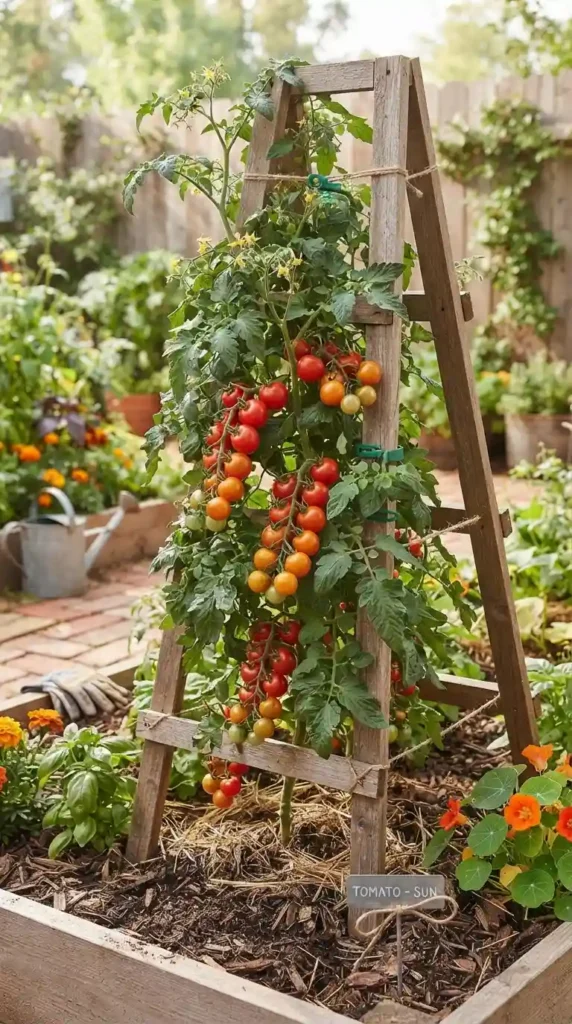
Better spacing improves sunlight penetration, helping tomatoes ripen more evenly with richer color and flavor. Supported plants also experience less stem breakage from heavy fruit clusters, allowing consistent harvesting over many productive weeks.
5. Malabar Spinach
Malabar spinach thrives in warm weather and climbs quickly across sturdy garden supports. Its thick, glossy leaves continue growing throughout summer, making it an excellent choice when traditional spinach struggles in hot temperatures.
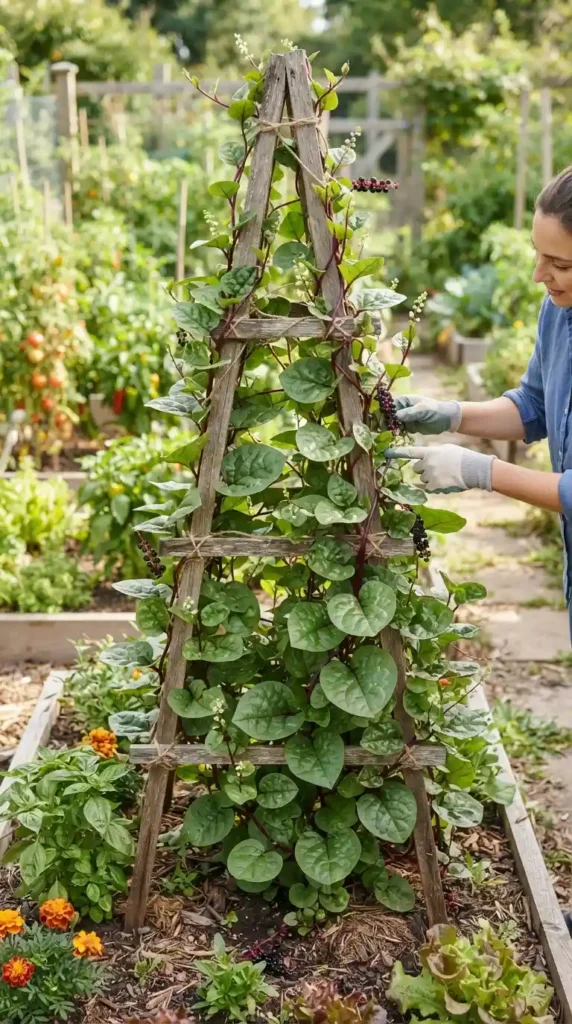
Vertical vines create attractive living screens while producing a continuous supply of edible leaves. Regular harvesting encourages fresh growth, allowing gardeners to enjoy nutritious greens without sacrificing valuable planting space in compact gardens.
6. Bitter Melon
Bitter melon develops vigorous vines that perform exceptionally well on tall trellises. Growing fruits above the ground improves air circulation, keeps them straighter, and reduces contact with damp soil that encourages disease.
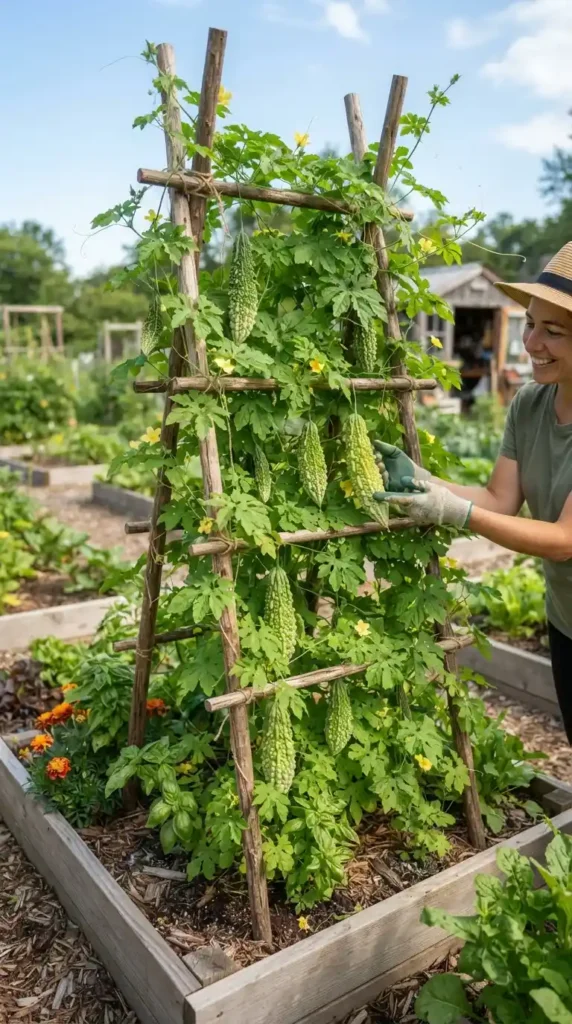
Strong supports help manage heavy vines while creating easier access during harvest. Hanging fruits also develop more evenly, giving gardeners healthier crops with fewer blemishes and making routine plant care much more convenient.
7. Luffa
Luffa plants produce long vines that require sturdy trellises for healthy development. Vertical growth keeps the developing gourds straight while improving airflow, reducing disease concerns, and creating an organized growing area throughout the season.
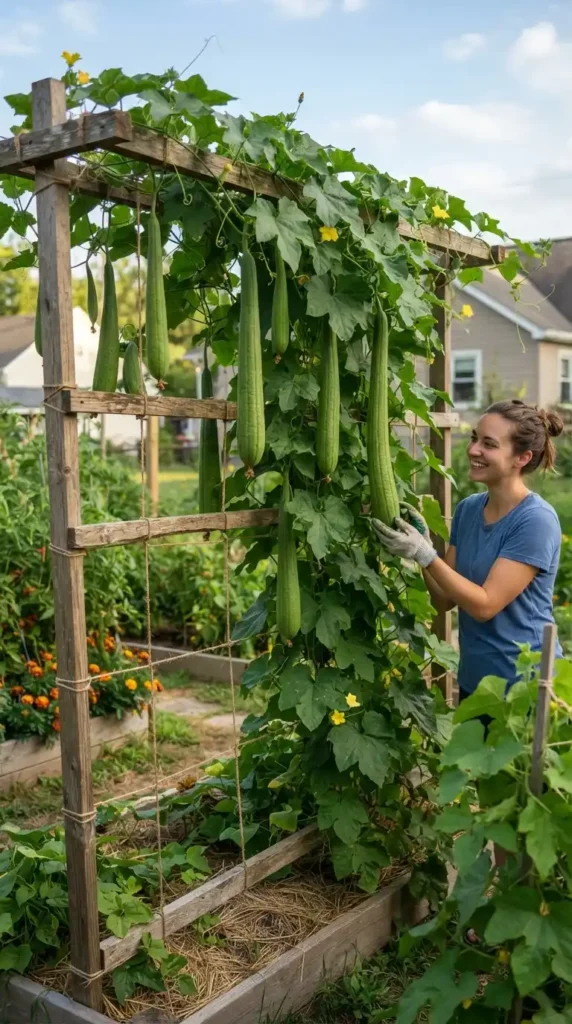
Young fruits can be harvested for cooking, while mature gourds become natural bath sponges. Strong support prevents heavy vines from sprawling across nearby plants and encourages larger, healthier fruits with consistent sunlight exposure.
8. Yardlong Beans
Yardlong beans climb rapidly and produce impressive hanging pods that are easy to harvest. Their vigorous vines make excellent use of vertical space while adding attractive greenery to gardens with limited planting areas.
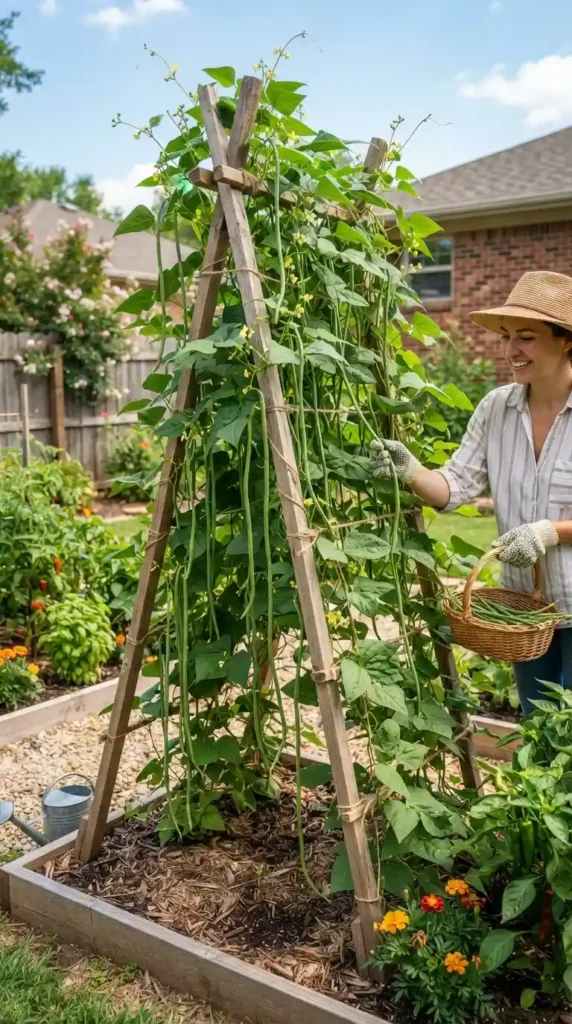
Frequent harvesting encourages continuous flowering and pod production throughout warm weather. Trellised plants remain tidy, receive better airflow, and allow gardeners to quickly spot mature beans before they become overly mature or tough.
9. Winter Squash
Certain winter squash varieties adapt well to heavy-duty trellises despite producing large fruits. Vertical growth saves space, improves airflow, and keeps developing squash away from wet soil that may encourage rot.
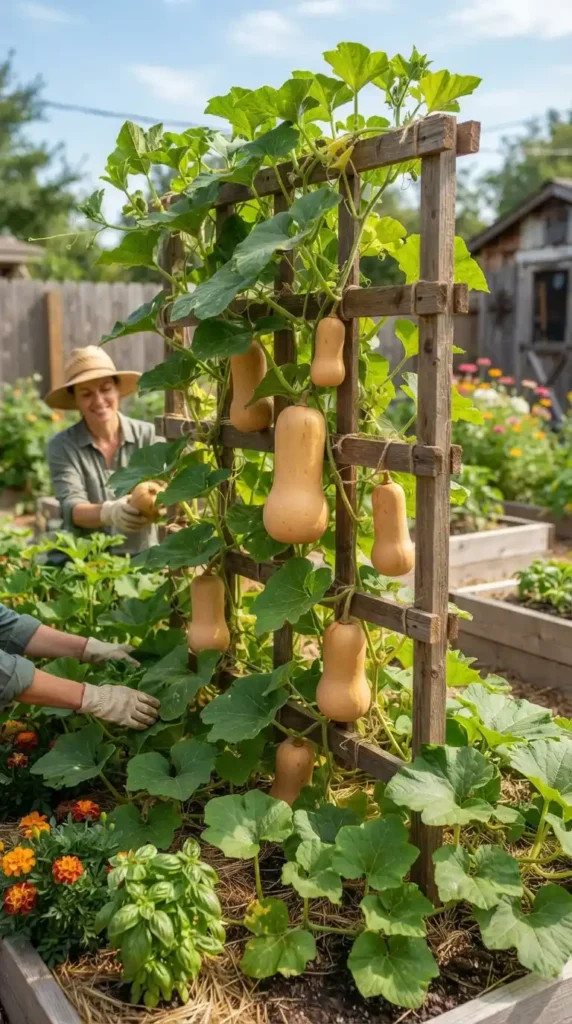
Large fruits may require fabric slings for additional support as they mature. Hanging squash often develops smoother skin while organized vines simplify watering, maintenance, and harvesting throughout the growing season with fewer damaged stems.
10. Pumpkins
Small pumpkin varieties are among the best Vegetables To Grow On A Trellis because they perform surprisingly well when supported by durable structures. Growing upward creates extra planting room while keeping vines under control, especially in compact backyard gardens with limited growing space.
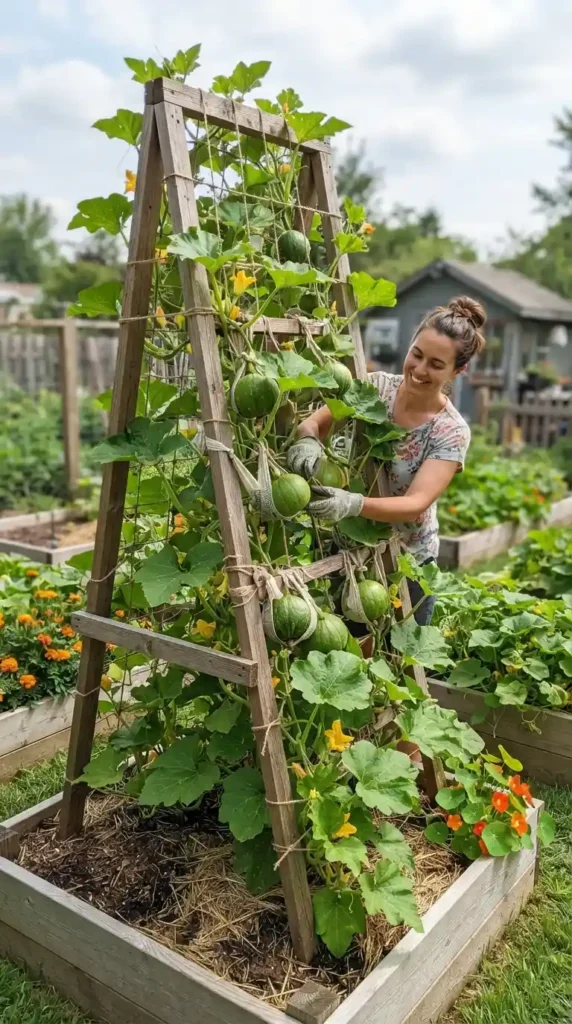
Heavy pumpkins benefit from supportive slings that reduce stress on stems during development. Better airflow and cleaner fruits help improve overall plant health while creating an eye-catching vertical feature in the vegetable garden.
11. Snap Peas
Snap peas eagerly climb lightweight supports, producing crisp edible pods throughout cool growing seasons. Vertical growth reduces tangled vines and allows better light exposure, helping plants remain healthy while producing abundant harvests in limited spaces.
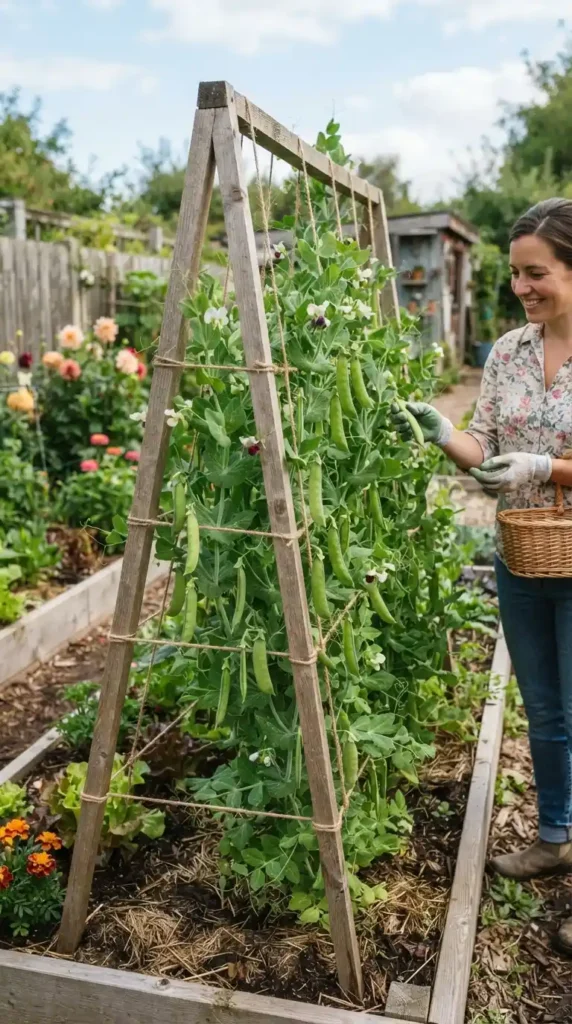
Pods stay cleaner because they hang above the soil instead of resting on damp ground. Easy visibility during harvesting also encourages regular picking, which supports continuous flowering and steady production over several weeks.
12. Chayote
Chayote is a vigorous climbing vegetable that quickly covers large trellises with lush foliage. Strong vertical support keeps vines manageable while giving the unique pear-shaped fruits room to develop without crowding nearby plants.
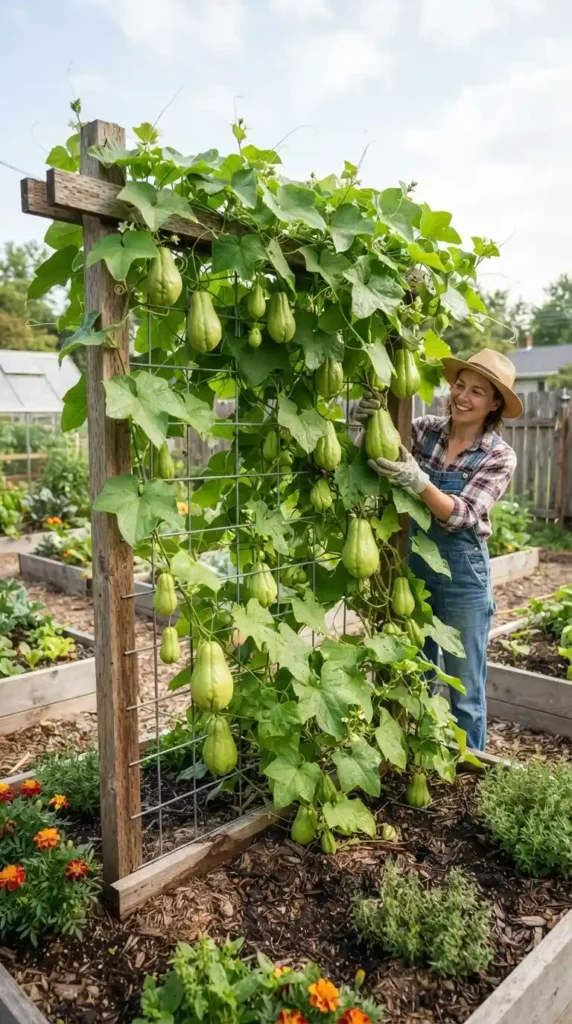
The dense leaves provide natural shade beneath the trellis during warm weather. Healthy vines continue producing for months, making chayote a rewarding option for gardeners seeking high yields from a single productive plant.
13. Scarlet Runner Beans
Scarlet runner beans combine ornamental beauty with edible harvests through bright flowers and climbing vines. Trellises showcase their colorful blooms while supporting vigorous growth that transforms fences and garden structures into living displays.
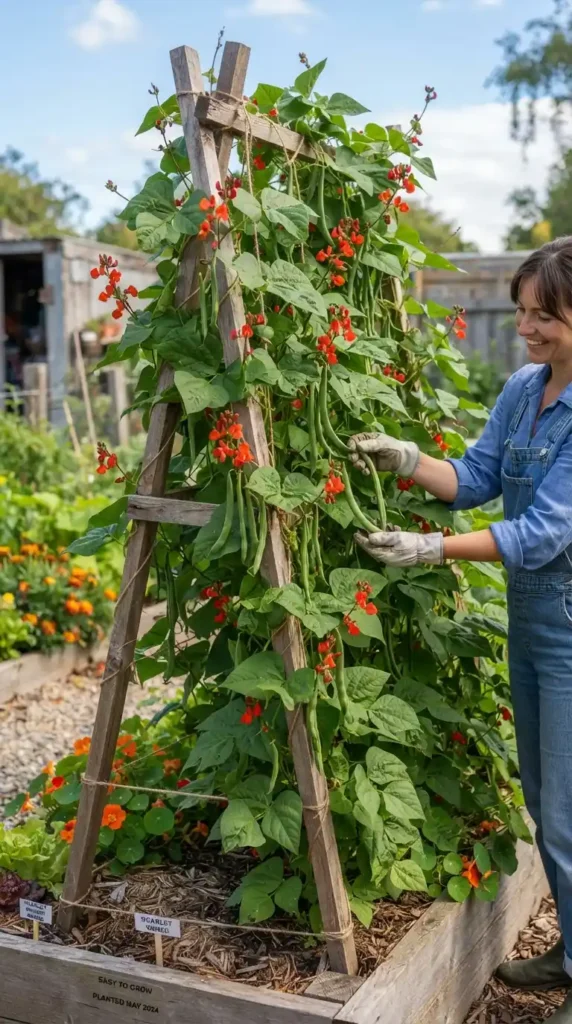
The attractive blossoms also invite pollinators that benefit nearby vegetables. Tender pods can be harvested young, while mature beans provide another useful crop later in the growing season for versatile garden production.
14. Armenian Cucumbers
Armenian cucumbers grow long, slender fruits that remain straighter when supported on trellises. Climbing vines improve airflow, simplify harvesting, and prevent fruits from developing uneven shapes caused by resting on the ground.
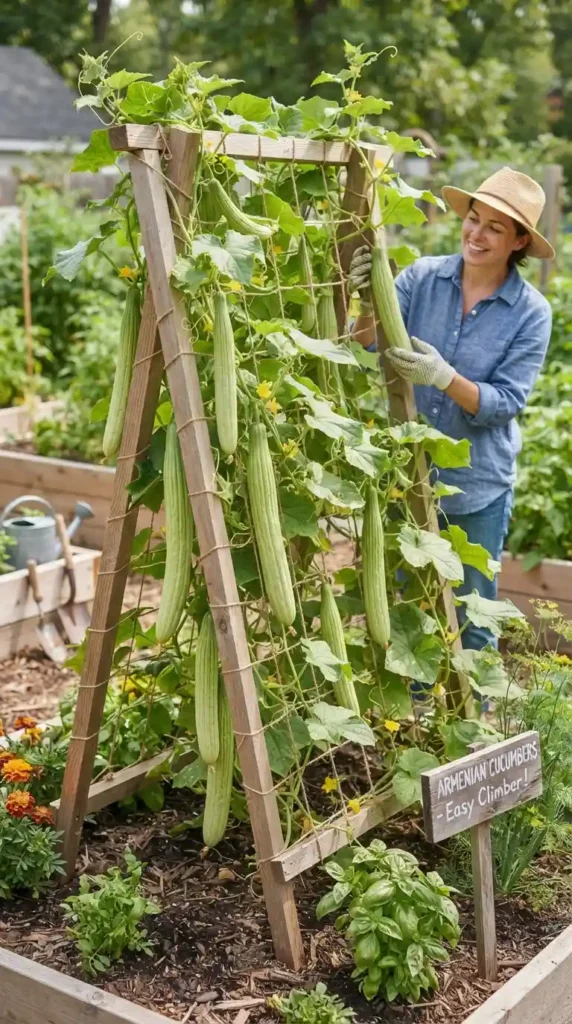
Warm weather encourages vigorous growth throughout summer with consistent watering. Vertical plants receive even sunlight, making fruits easier to spot while keeping garden beds cleaner and reducing common moisture-related plant problems.
15. Passion Fruit Vine
Passion fruit vines grow aggressively and require strong trellises to support their sprawling stems. Vertical training improves airflow, keeps fruits accessible, and creates a beautiful green feature that combines ornamental value with edible harvests.
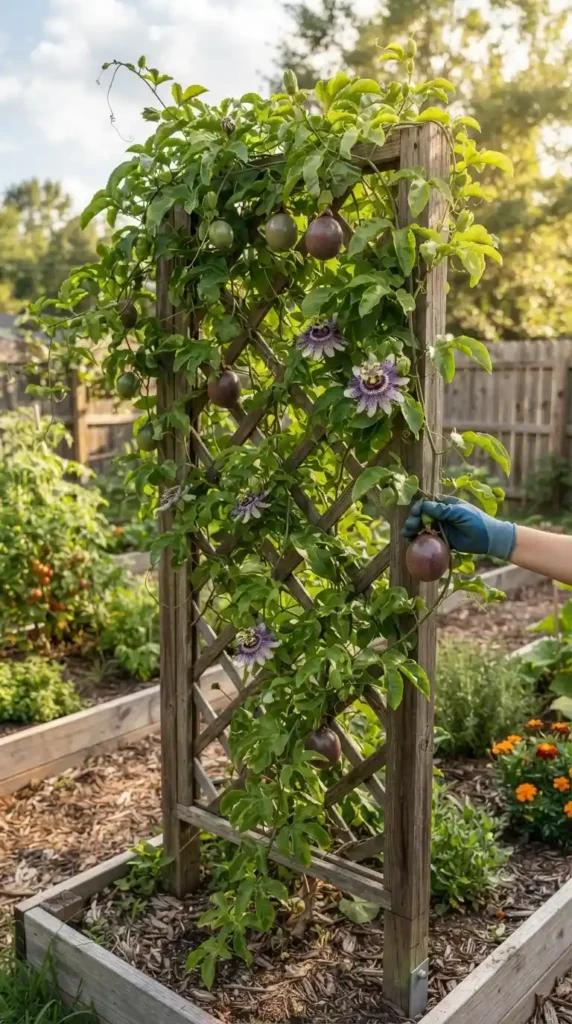
Fragrant flowers attract helpful pollinators, increasing fruit production over time. Regular pruning keeps vigorous vines manageable while encouraging healthy branching, making the trellis both productive and visually appealing throughout the growing season.
How To Choose the Best Vegetables To Grow On A Trellis
Choosing the right vegetables for a trellis helps you save space, improve air circulation, and make harvesting much easier. Focus on crops with climbing vines or plants that naturally benefit from vertical support to enjoy healthier growth and higher yields.
- Choose Natural Climbers: Pick vegetables like cucumbers, pole beans, peas, and climbing squash because they naturally produce vines that quickly attach to a trellis and grow upward with minimal support.
- Consider Plant Weight: Select vegetables that stay relatively lightweight or be prepared to provide extra support with slings for heavier crops like melons, pumpkins, or large squash.
- Match the Trellis Size: Choose vegetables based on the height and strength of your trellis so fast growing plants have enough room to spread without becoming overcrowded.
- Think About Sunlight Needs: Grow vegetables that receive at least six to eight hours of direct sunlight each day because healthy climbing plants produce better foliage, flowers, and harvests.
- Pick High Yield Varieties: Choose productive climbing varieties instead of bush types to make the most of your vertical garden while enjoying a longer harvest season in a smaller space.
Mistakes Should You Avoid When Growing Vegetables on a Trellis
Growing vegetables on a trellis is easy when you avoid a few common mistakes. Proper support, spacing, and care help plants stay healthy and produce more vegetables throughout the season.
- Use a Strong Trellis: A weak trellis can break under heavy vines and damage your plants.
- Avoid Crowding Plants: Leave enough space so vines get sunlight and good airflow.
- Train Vines Early: Guide stems onto the trellis to keep growth neat and healthy.
- Water Consistently: Keep the soil evenly moist to support steady growth and fruit production.
- Harvest on Time: Pick ripe vegetables regularly to encourage more flowers and fresh produce.
Conclusion
Growing upward helps maximize garden space while improving airflow, sunlight exposure, and harvesting convenience. Even small gardens can produce generous crops when climbing plants receive proper support and regular care throughout every growing season.
Vegetables To Grow On A Trellis make gardening more organized while encouraging healthier plants and cleaner harvests. Start with a few easy climbers, maintain sturdy supports, and enjoy productive harvests season after season.