15 DIY Pea Trellis Ideas for a Bigger and Healthier Garden
Pea plants often fall over, grow unevenly, and produce fewer pods without proper support. Strong diy pea trellis ideas help vines climb easily, improve airflow, and keep plants healthy throughout the growing season.
Simple garden materials can create sturdy structures without spending much money. Better support keeps pods clean, makes harvesting easier, and reduces broken stems after heavy rain or strong winds.
Every garden has different space and growing needs, so one design never fits all. These creative trellis ideas add support, save room, and help your pea plants produce a larger harvest.
The Pea Trellis Mesh Size: Why It Matters More Than You Think
The 1 to 2 inch mesh opening range works best because it matches how pea tendrils naturally climb and attach. Understanding this helps you evaluate different trellis options more effectively.
Pea tendrils are approximately ⅛ to ¼ inch in diameter and curl into circles 1 to 3 inches in diameter when they grab a support. This means:
- Too large mesh (over 3 inches): Tendrils slip through without finding a support to wrap around. The plant cannot support itself on the trellis and requires manual tying, which reduces the benefit of using mesh.
- Optimal mesh (1 to 2 inches): Tendrils enter the openings and wrap around the wire, creating a secure natural attachment. The plant climbs independently with very little help.
- Too small mesh (under ½ inch): It can support pea plants well, but harvesting becomes harder because pods may grow inside the mesh and become difficult to remove without damage. These options are also usually more expensive.
The ¼ inch or less support width principle: For twine, wire, branches, and other non mesh supports, the part the tendril wraps around should be ¼ inch in diameter or less. Pea tendrils struggle to grip thick bamboo poles but easily attach to garden twine.
This is why netting, string, chicken wire, and twiggy branches work well for peas, while smooth, thick posts without added support materials are less effective as climbing surfaces.
15 DIY Pea Trellis Ideas for Stronger Plants and Bigger Yields
Peas grow better when they have strong support to climb as they get taller. A simple trellis helps keep plants healthy, saves garden space, and makes harvesting much easier. Here are trendy pea trellis ideas to inspire stronger plants and bigger yields in your garden.
1. Bamboo Teepee Pea Trellis
A bamboo teepee is one of the most practical diy pea trellis ideas for creating a sturdy climbing frame using long bamboo poles tied together at the top. The open design supports vigorous pea vines while allowing sunlight and fresh air to reach every growing stem with ease.
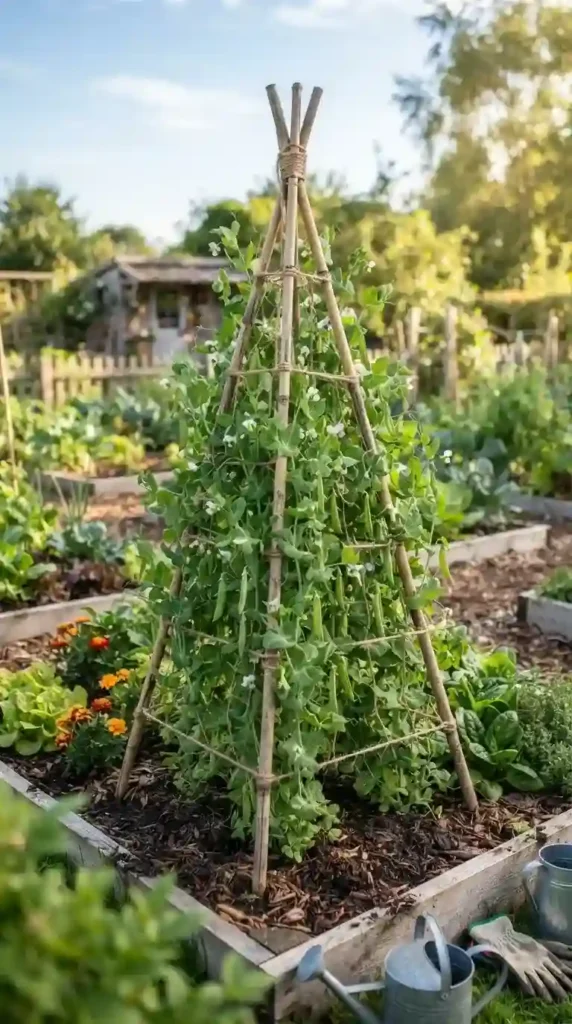
Wrap garden twine horizontally around the bamboo poles to provide extra climbing points for young tendrils. This natural structure blends beautifully into vegetable gardens, lasts through the season, and can be stored for future planting years.
2. Cattle Panel Arch Trellis
A cattle panel arch transforms an ordinary garden path into a productive growing tunnel for peas. The curved metal frame offers exceptional strength, allowing vines to spread evenly while creating a beautiful green walkway during spring.
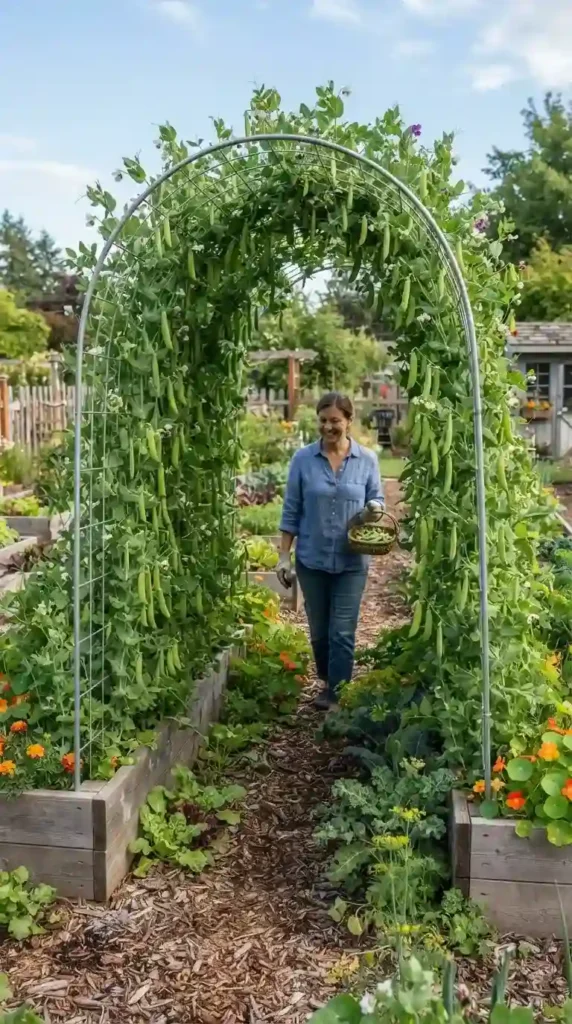
Secure both ends firmly with metal stakes before planting peas underneath the arch. As vines cover the structure, harvesting becomes simple because pods hang down naturally from both sides within easy reach every day.
3. Wooden Ladder Trellis
An old wooden ladder becomes a charming vertical support that requires very little effort to assemble. The evenly spaced rungs give pea tendrils countless places to grab, encouraging straight growth without crowding neighboring vegetable plants together.
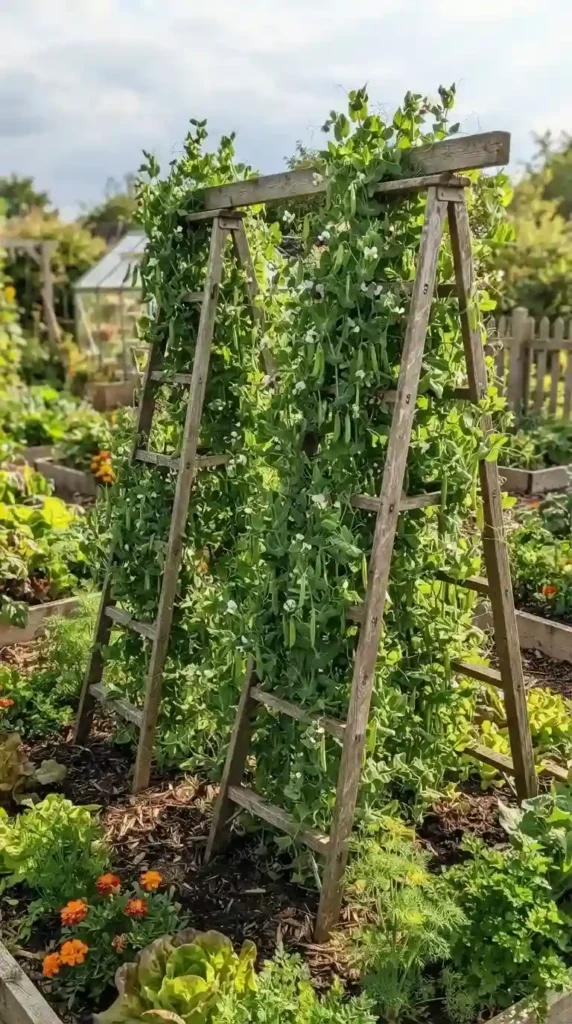
Lean the ladder securely against sturdy stakes or anchor it into the soil for stability. This recycled project adds rustic character while making watering, pruning, and harvesting much easier throughout the growing season in small gardens.
4. Chicken Wire Frame Trellis
Chicken wire stretched across a simple wooden frame creates reliable support for climbing peas. The small openings help delicate tendrils attach quickly, encouraging healthy upward growth while preventing stems from trailing across damp garden soil below.
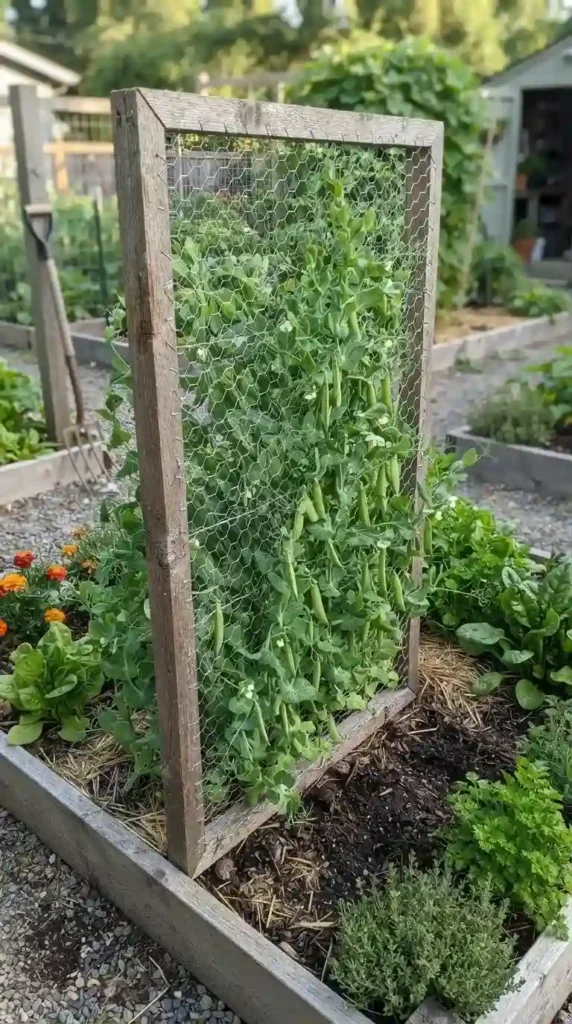
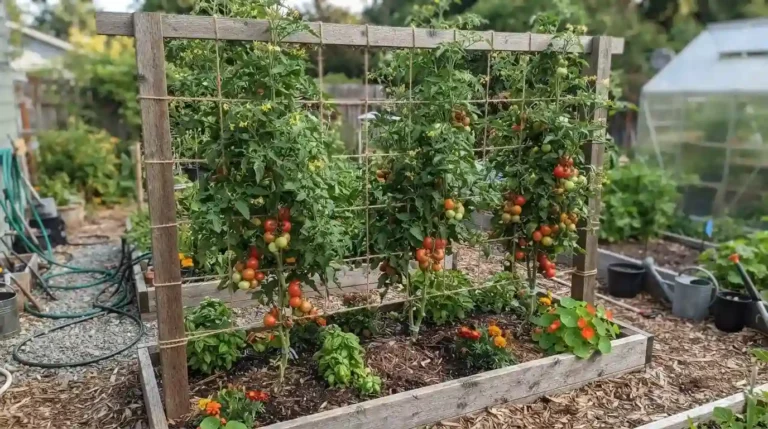
Build the frame using inexpensive lumber and staple the wire tightly across the surface. This practical design works especially well for raised beds, providing strong support without blocking sunlight from nearby vegetables growing beside the peas.
5. String and Pole Trellis
Tall wooden poles connected with strong garden string create a lightweight trellis perfect for peas. Vertical strings guide young vines upward while giving every plant enough room to receive light and healthy air circulation throughout growth.
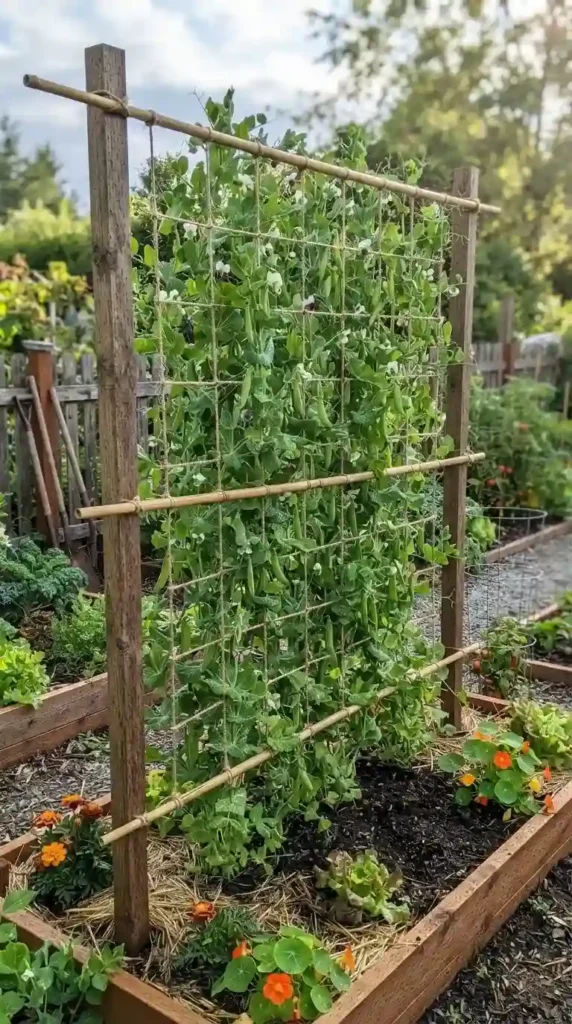
Tie each string tightly from the top support beam to ground stakes before planting. This affordable method uses minimal materials, fits gardens of every size, and makes replacing worn strings quick at the beginning of each season.
6. Recycled Bicycle Wheel Trellis
An old bicycle wheel becomes a creative centerpiece when mounted on a sturdy wooden post. Spokes naturally guide pea vines outward, creating a decorative display while giving every stem reliable support as plants continue climbing upward.
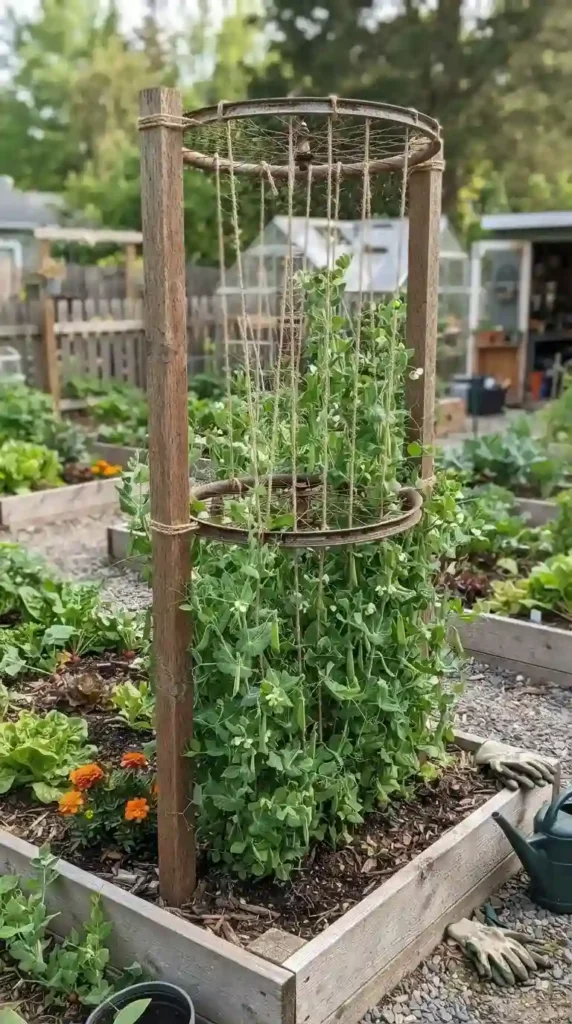
Attach additional strings from the wheel to ground anchors for even greater climbing space. This recycled project reduces waste, adds personality to vegetable beds, and becomes an interesting conversation piece throughout the gardening season every year.
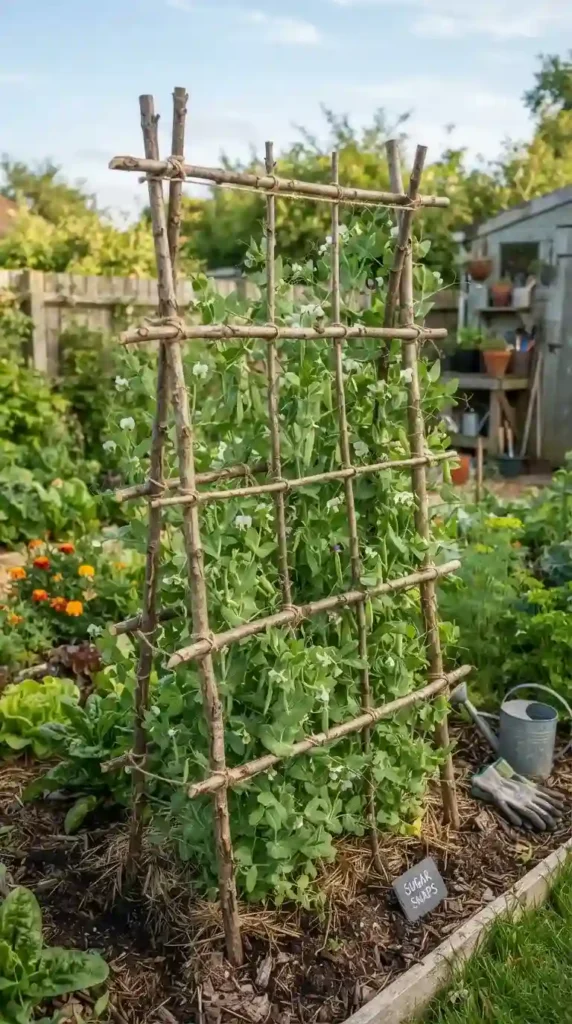
7. Branch and Twig Trellis
Collected tree branches and sturdy twigs form an attractive natural trellis without purchasing expensive materials. Different branch sizes create plenty of gripping points, helping pea vines climb while giving the garden a woodland-inspired appearance throughout spring.
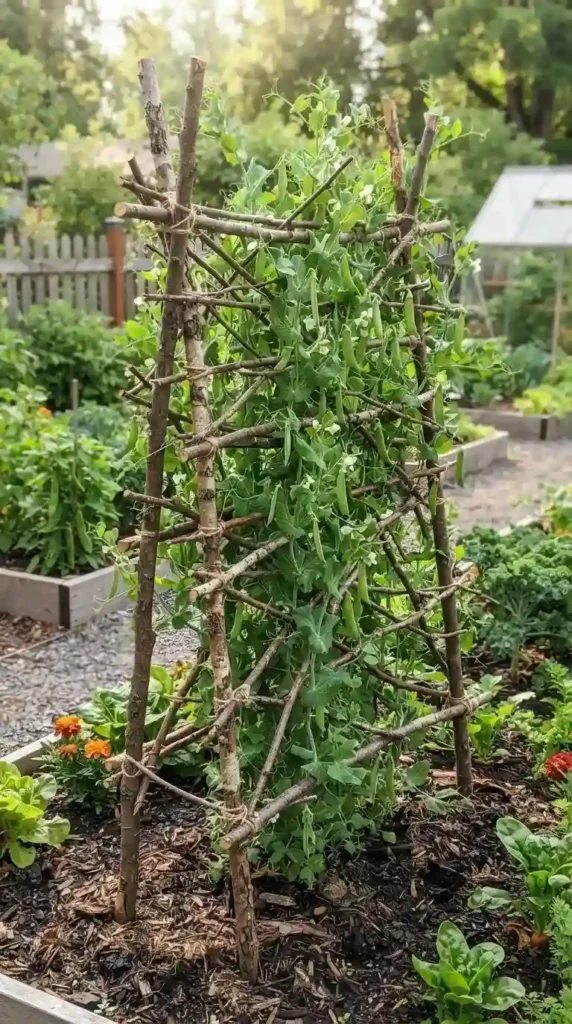
Push thicker branches deeply into the ground before weaving smaller twigs between them securely. The finished structure blends naturally into garden beds and eventually returns to the soil after serving its purpose through the season.
8. PVC Pipe Grid Trellis
PVC pipes connected into a rectangular grid create a lightweight yet durable climbing structure for peas. The smooth material resists moisture, making it suitable for repeated garden use without concerns about rotting after rainy weather.
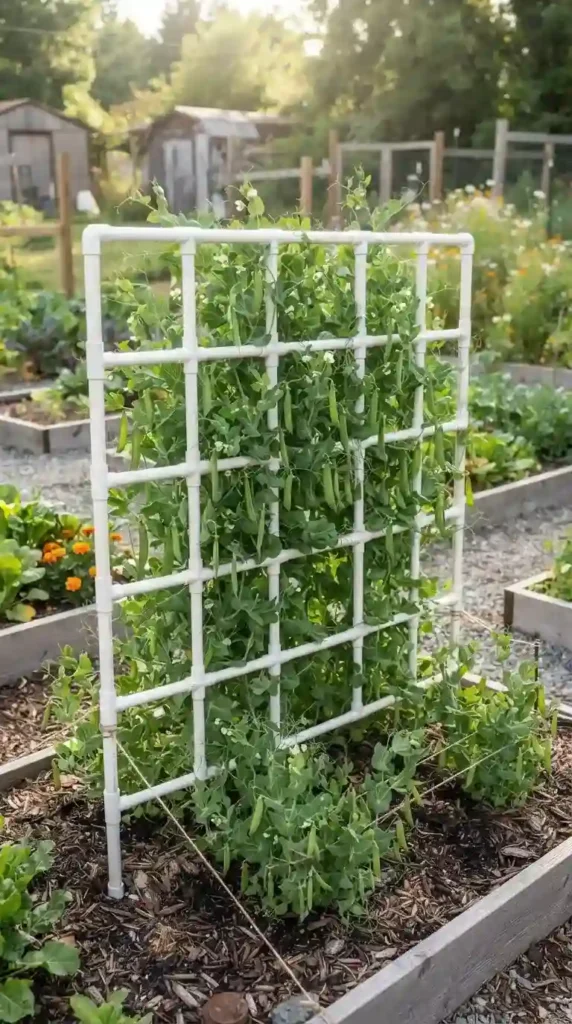
Connect pipes with corner fittings and secure the frame using sturdy ground stakes for stability. Add garden netting across the center to increase climbing space while keeping the entire structure easy to disassemble and store.
9. Folding Garden Net Trellis
A folding garden net supported by simple stakes provides flexible climbing space for pea plants. The mesh encourages vines to spread evenly while making installation quick for gardeners who want an easy seasonal support solution outdoors.
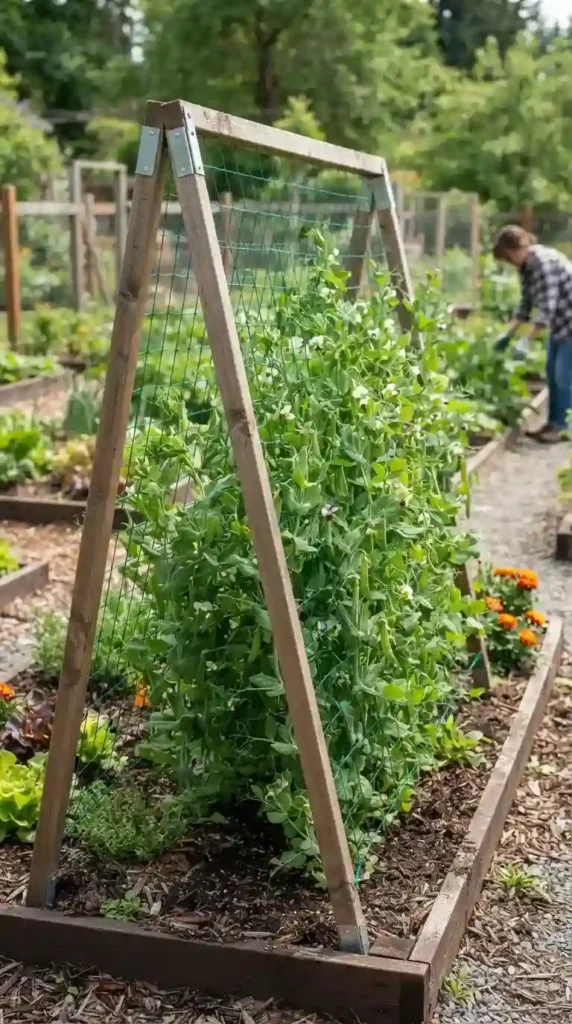
Place sturdy stakes several feet apart before stretching the net tightly between them. This portable setup works well in raised beds and can be folded neatly for compact storage after harvesting the final pea pods.
10. Rustic Fence Trellis
A simple wooden fence is one of the most useful diy pea trellis ideas for creating a dependable climbing surface for healthy pea plants every season. Vertical boards provide strong support while keeping vines organized and leaving plenty of room for nearby vegetables to continue growing comfortably.
Fasten garden twine across fence sections to create additional climbing paths for young plants. This practical design maximizes existing garden structures instead of building separate supports, saving both time and materials during spring planting.
11. Copper Pipe Trellis
Copper pipes create an elegant trellis that combines durability with modern garden style. The strong framework supports heavy pea vines while developing a beautiful weathered finish that adds visual interest throughout the growing season outdoors.
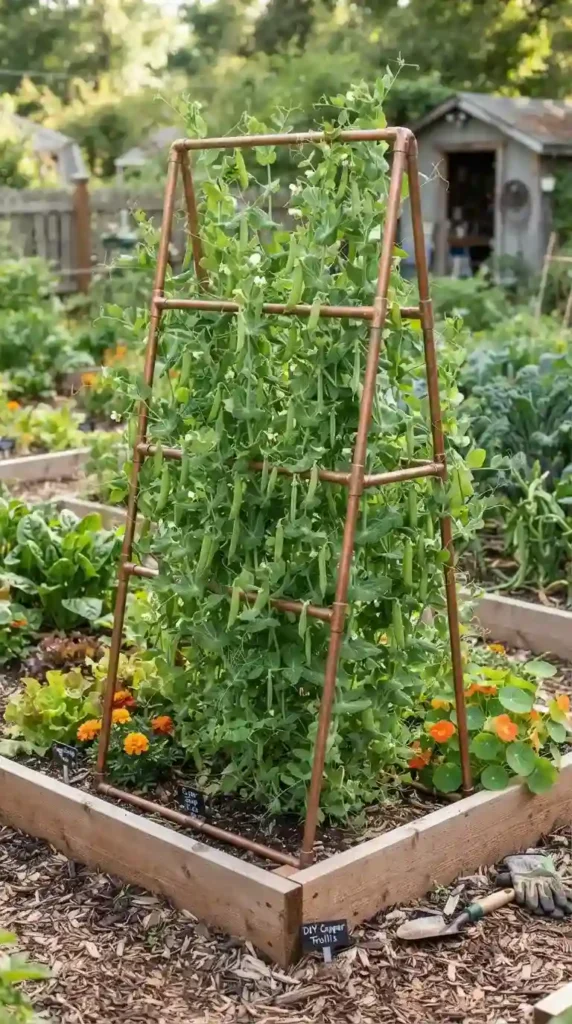
Assemble the frame using pipe connectors and secure it firmly into the soil before planting. The finished structure lasts for many years, making it a worthwhile option for gardeners seeking long-term climbing support solutions.
12. Raised Bed Corner Trellis
A corner trellis fits neatly into raised beds, making excellent use of limited growing space. The angled design encourages peas to climb upward while leaving valuable soil available for companion vegetables and herbs nearby every season.
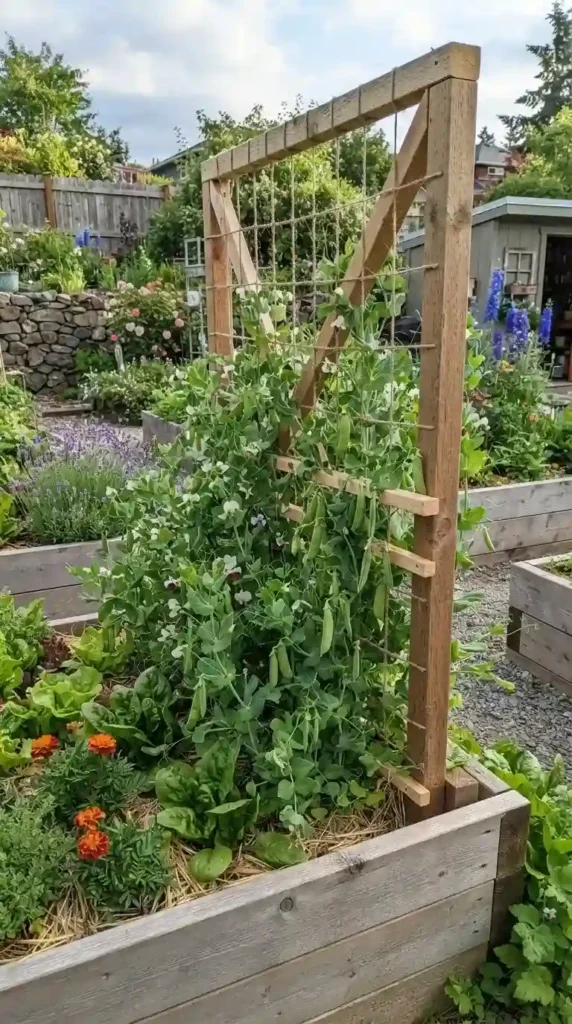
Build the frame using wooden slats attached securely to corner posts for dependable strength. This compact solution keeps vines organized, simplifies harvesting, and creates a tidy appearance throughout the entire raised garden bed area.
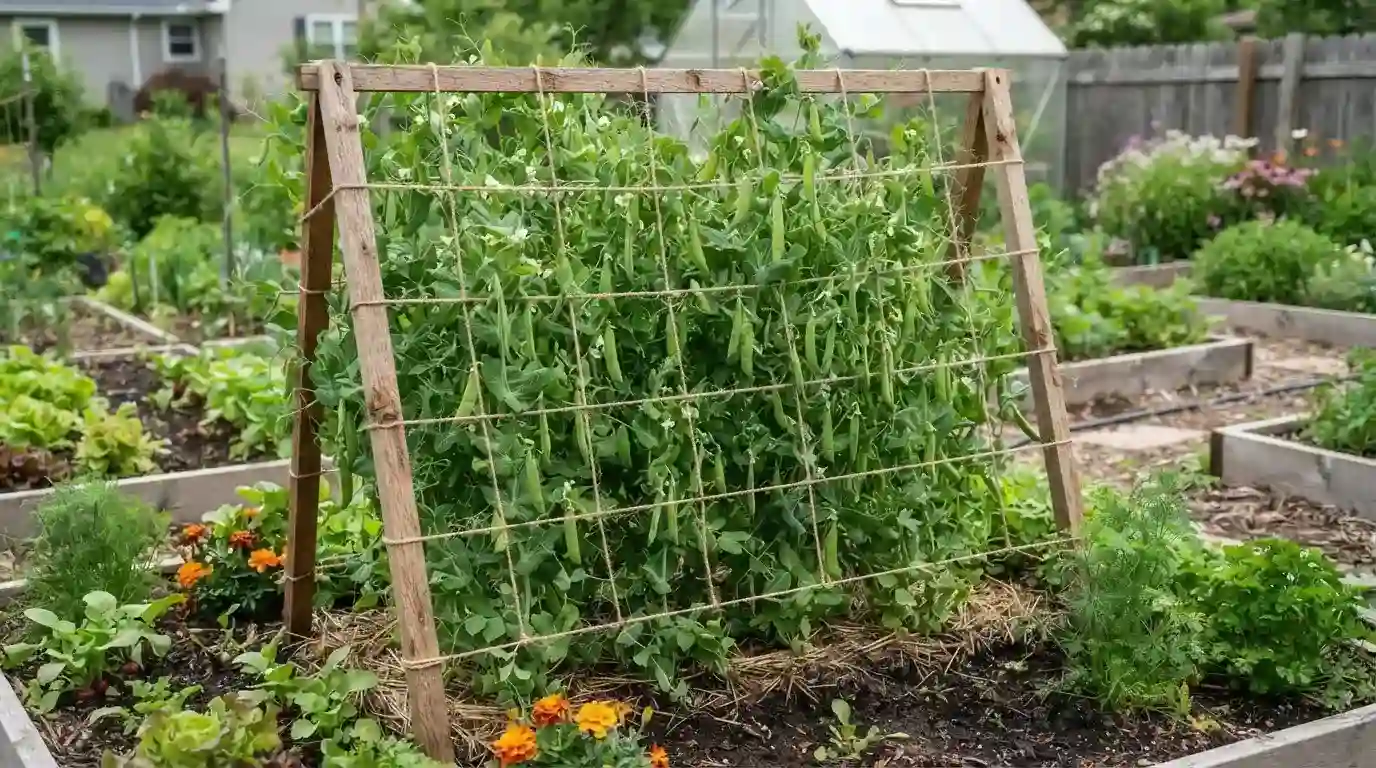
13. Wooden A-Frame Trellis
A wooden A-frame offers climbing space on both sides, allowing gardeners to grow more peas within one structure. The balanced shape increases airflow, improves sunlight exposure, and keeps plants healthier throughout the productive growing season outdoors.
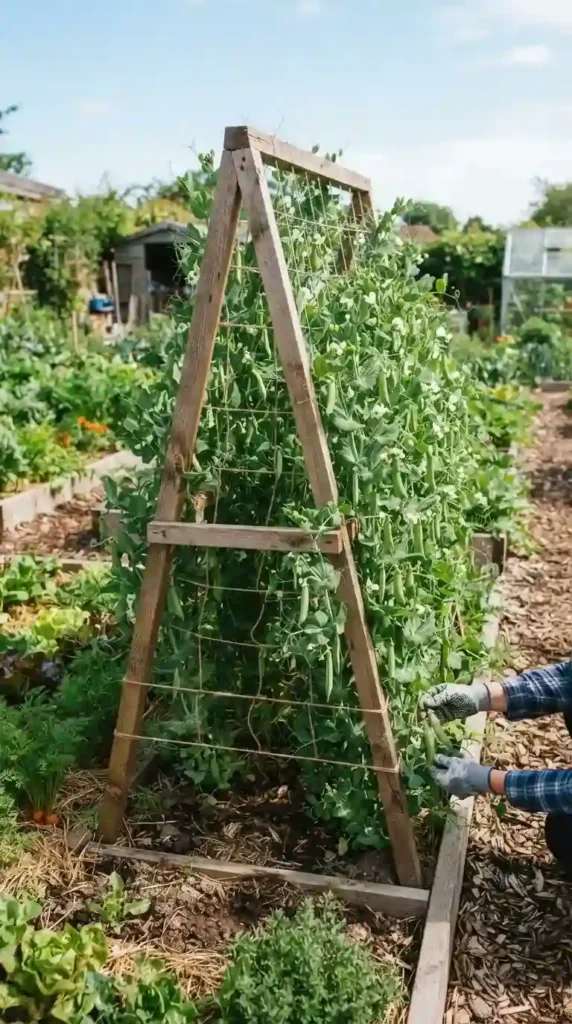
Join wooden boards with sturdy hinges so the frame folds flat after harvest each year. Stretch garden netting across both sides to provide extra support while maintaining convenient access for picking fresh pea pods regularly.
14. Rope Wall Trellis
A rope wall trellis creates a simple vertical garden using thick outdoor rope secured between wooden supports. Pea vines wrap naturally around the ropes, producing organized growth while adding texture and height to vegetable gardens beautifully.
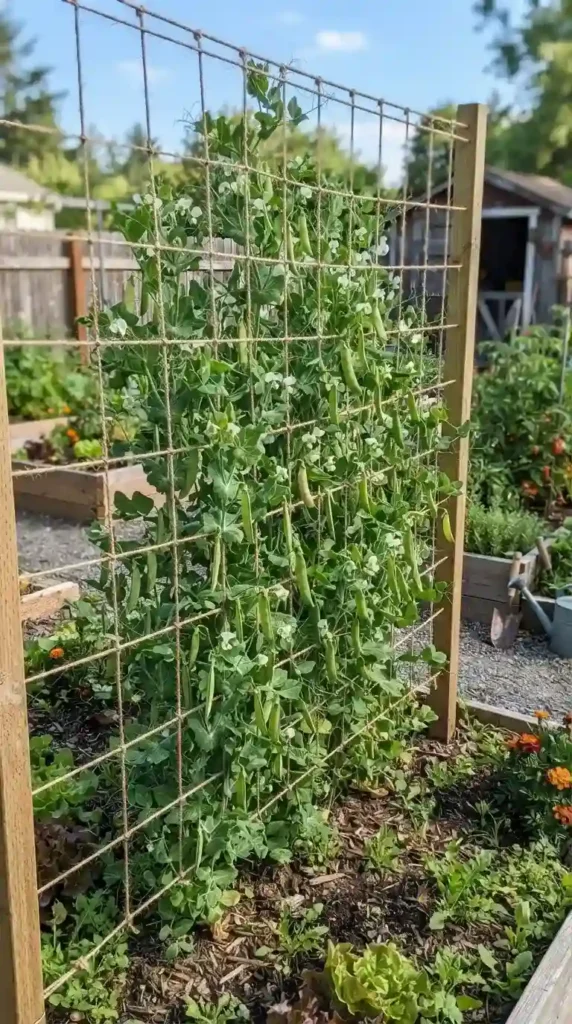
Use weather-resistant rope to withstand rain, sunshine, and changing outdoor conditions throughout the season. This design suits narrow spaces beside fences, sheds, or walls where traditional trellis frames may not fit comfortably or safely.
15. Willow Wigwam Trellis
Flexible willow branches woven into a wigwam create an attractive support that feels both traditional and decorative, making it a beautiful choice among diy pea trellis ideas. The living branches provide numerous climbing points while giving pea plants a secure framework for steady upward growth outdoors.
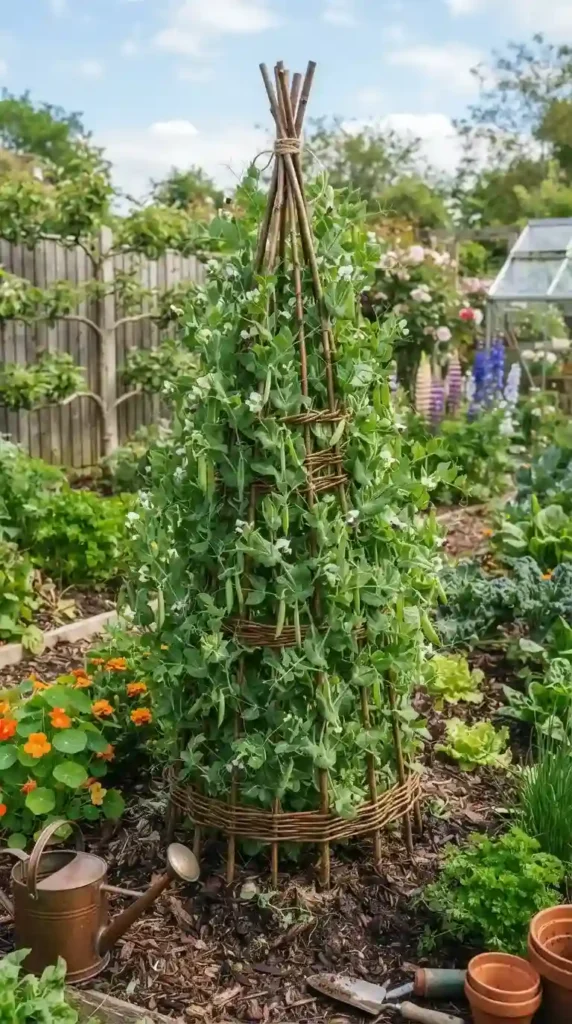
Push fresh willow rods firmly into the soil before weaving additional branches around the structure carefully. The finished wigwam complements cottage gardens, supports healthy vines, and creates a charming focal point beside flowers and vegetables alike.
Mistakes Should You Avoid When Making a Pea Trellis
A well-made pea trellis helps plants climb easily and grow stronger. Avoid these common mistakes to provide better support and encourage a healthier pea harvest.
- Choosing a trellis with very wide gaps can prevent pea tendrils from gripping properly, causing vines to lean or fall.
- Using weak materials may make the structure unstable and unable to support heavy pea vines as they grow.
- Adding the trellis after vines spread too much can make training the plants difficult and may damage stems.
- Placing the trellis where sunlight is limited can slow growth and reduce the number of healthy pea pods.
- Failing to secure the trellis firmly in the soil can cause it to move or fall during strong winds.
Conclusion
DIY pea plants grow stronger with reliable support that keeps vines healthy, improves airflow, and makes harvesting easier. These creative diy pea trellis ideas offer practical solutions for gardens of every size while adding attractive vertical interest.
Build a trellis using simple materials that match your available space, budget, and gardening style. Strong support helps produce cleaner pods, healthier plants, and a more productive vegetable garden throughout every growing season.