16 Trendy Shade Garden Design Ideas for Low-Light Outdoor Spaces
Dark outdoor corners often look empty, damp, and difficult to decorate. Many homeowners struggle with plants that fail to grow well in limited sunlight, leaving garden spaces unattractive and underused. These low-light areas can quickly lose their charm and become forgotten parts of the yard.
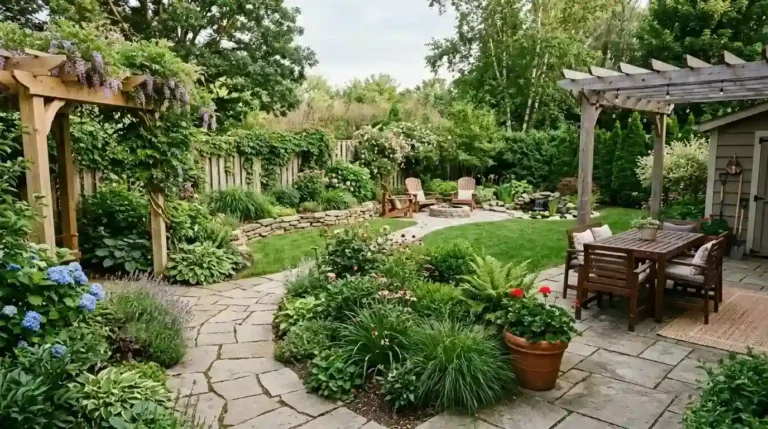
A well-planned shade garden solves this problem by using plants, textures, and design features that thrive without direct sun. The right layout adds color, depth, and interest while reducing maintenance. Even small shaded spaces can become inviting and visually appealing throughout the seasons.
These shade garden design ideas offer simple ways to transform low-light outdoor areas into beautiful retreats. From lush greenery to decorative pathways and seating corners, each idea helps create a relaxing atmosphere while making the most of spaces where sunlight is limited.
Why Shade Gardens Can Be The Most Relaxing Part Of Your Yard
Sunny gardens often steal the spotlight, but shaded spaces have their own charm. Shade gardens feel cooler during warm weather. Shade gardens also create a calm atmosphere that invites people to slow down and enjoy nature.
Shade-loving plants offer layers of texture, interesting foliage, and soft colors. Shade garden designs work well in small yards, large landscapes, and even narrow side spaces. The Shade Garden Design Ideas below show practical ways to create a stylish garden without chasing sunlight.
1. Fern-Filled Woodland Garden
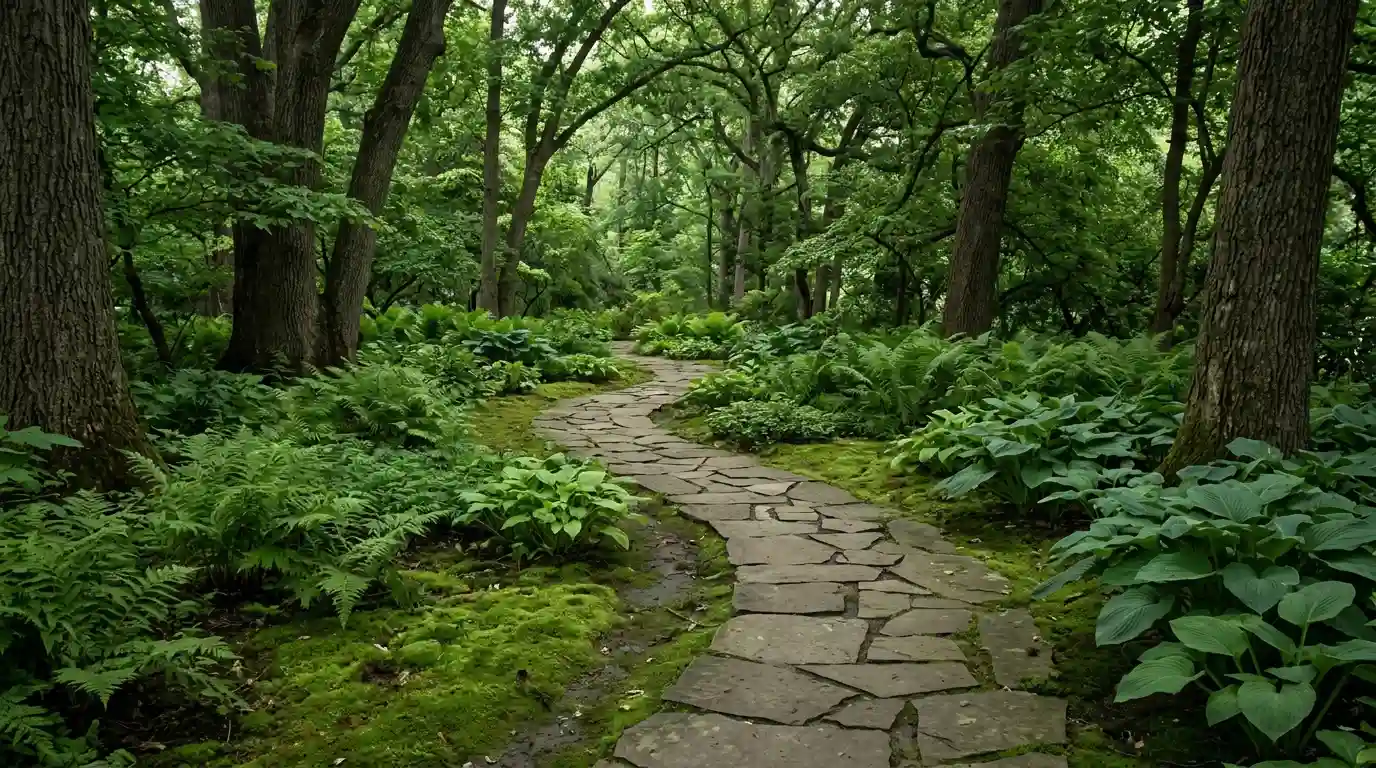
Woodland shade gardens create natural forest-style spaces under trees and walls. Ferns grow in low light conditions and spread soft green textures across soil areas, creating calm layered scenery that feels balanced, fresh, and visually soothing throughout seasons naturally.
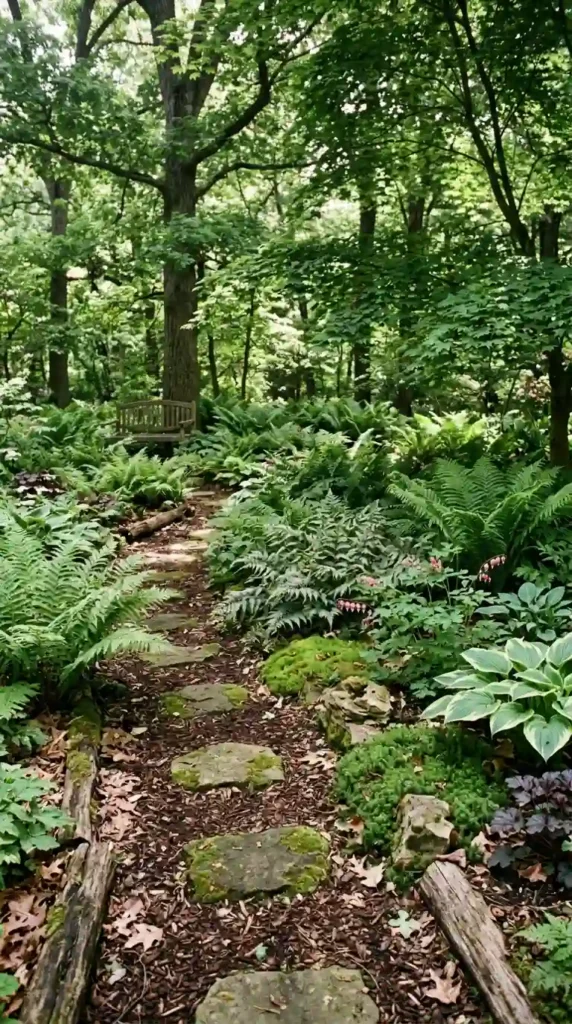
Fern gardens remain attractive across all seasons due to consistent foliage structure. Mixing fern varieties with moss stones, mulch paths, and woodland plants like hostas and astilbes enhances depth, creating rich layered shade gardens that feel alive and peaceful naturally.
2. Curved Stone Path Through Shade
Curved stone pathways guide movement through shaded gardens while adding structure and elegance. Natural stone blends with greenery and softens landscape appearance without disrupting the calm atmosphere created by limited sunlight filtering through trees and surrounding dense garden planting spaces.
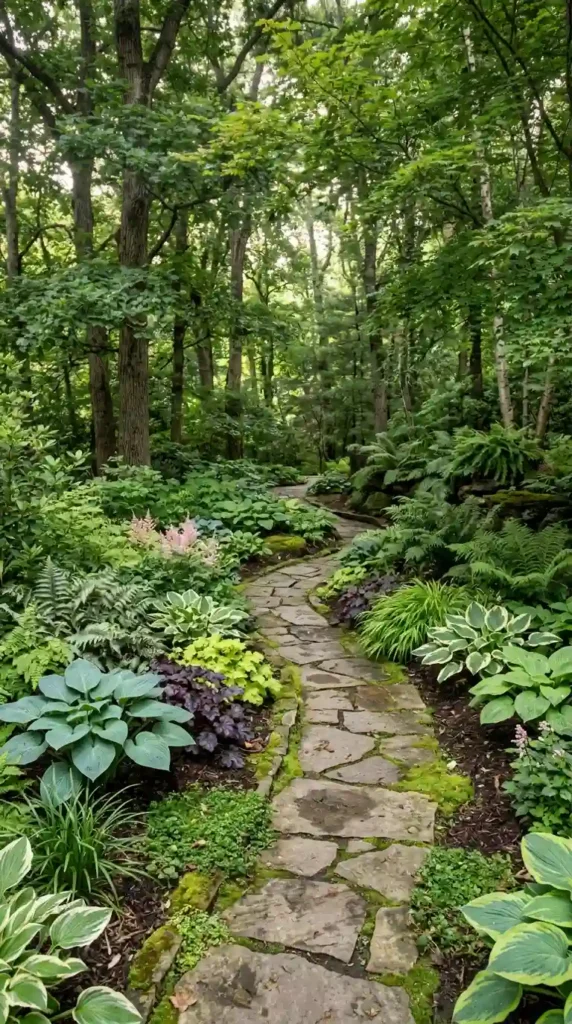
Winding stone paths enhance Shade Garden Design Ideas by making shaded spaces feel larger, more inviting. Ground covers like creeping thyme or moss fill gaps between stones while subtle lighting improves visibility and highlights curves.
3. Cozy Bench Under Mature Trees
Seating placed under mature trees creates natural relaxation zones within shaded gardens. A simple bench offers quiet resting space surrounded by cool air and filtered sunlight passing through dense leaves above, forming comfortable outdoor retreat spaces for daily use.
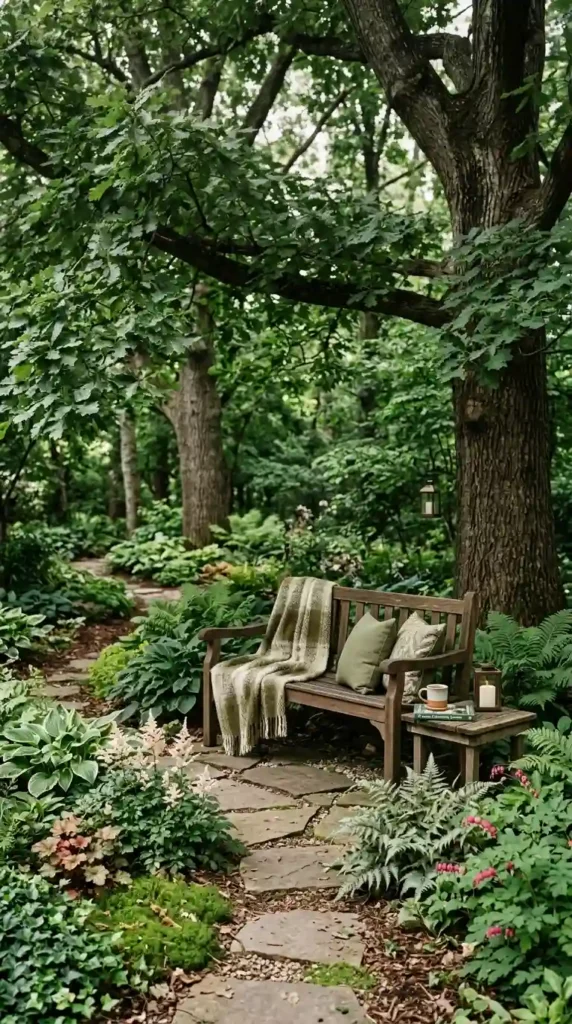
Shade garden seating areas improve outdoor comfort and usability. Surrounding benches with hostas ferns and low shrubs enhances privacy and softness. Decorative lanterns or side tables add function, making shaded corners ideal for reading, resting or peaceful evening conversations together.
4. Hosta Collection Garden
Hosta gardens display variety in leaf size, color, and texture. These shade-loving plants grow well in low light conditions and form structured planting beds that feel organized yet lush throughout the growing season, creating natural visual flow across spaces.
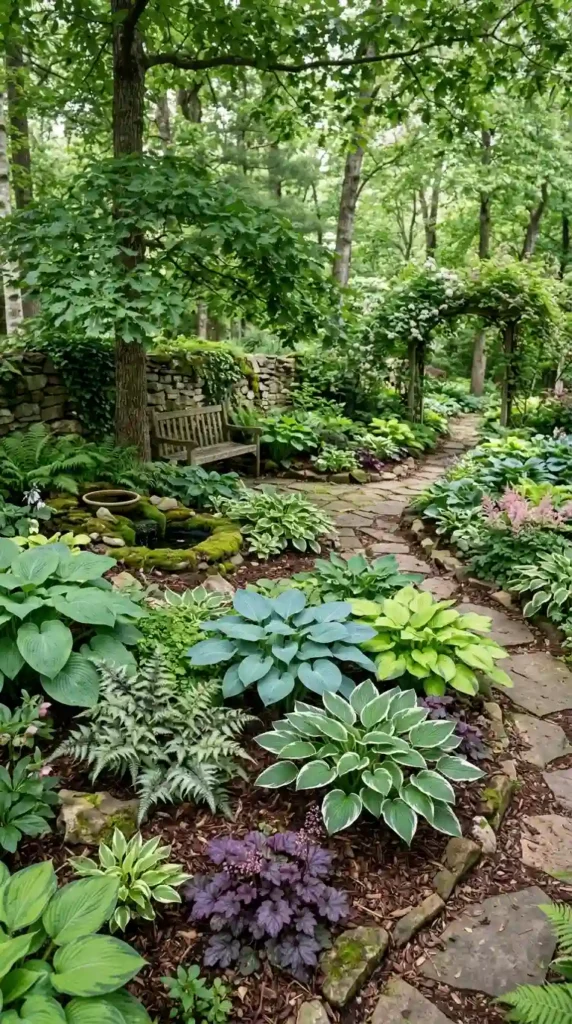
Seasonal maintenance remains simple because hostas require minimal care once established. Regular watering and occasional division help maintain plant health. Different varieties provide long lasting foliage interest, ensuring shaded gardens remain attractive even without flowering plants present all through year.
5. White Flowers To Brighten Shade
White flowers brighten shaded garden spaces by reflecting limited light and creating clean visual contrast. Plants such as astilbe, impatiens, and anemones thrive in partial shade, adding soft elegance and improving visibility across darker garden corners with gentle brightness effect.
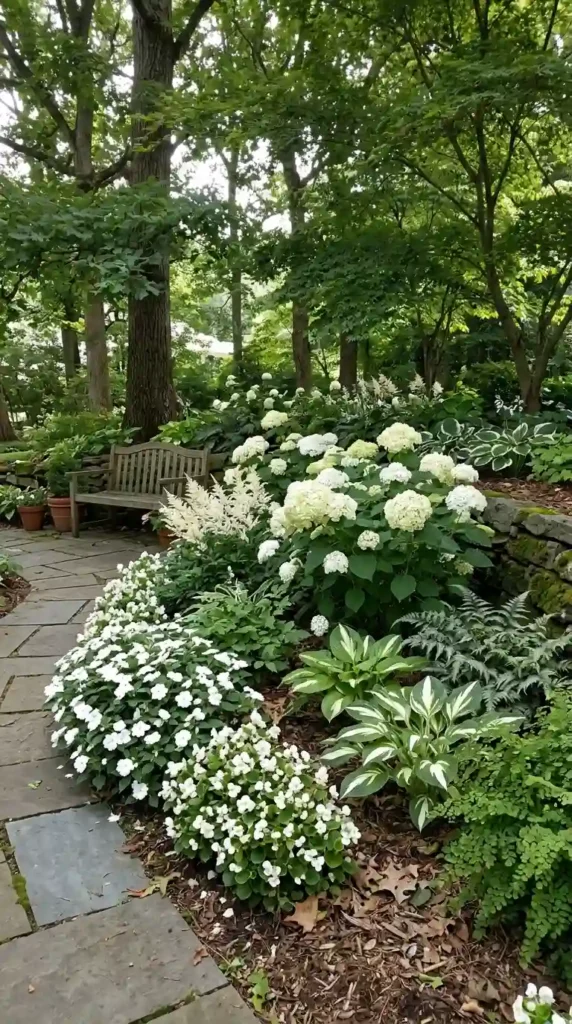
White blooms stand out even in cloudy weather conditions, making shaded areas feel lighter and more inviting. Combining flowering plants with deep green foliage increases contrast while maintaining simple maintenance and allowing gardens to appear fresh throughout seasonal changes naturally.
6. Small Water Feature In Shade
Small water features enhance shaded gardens by introducing movement sound and reflection. Fountains placed among shade loving plants create calming focal points while improving atmosphere and attracting birds, making quiet corners feel alive and naturally refreshing spaces throughout seasons always.
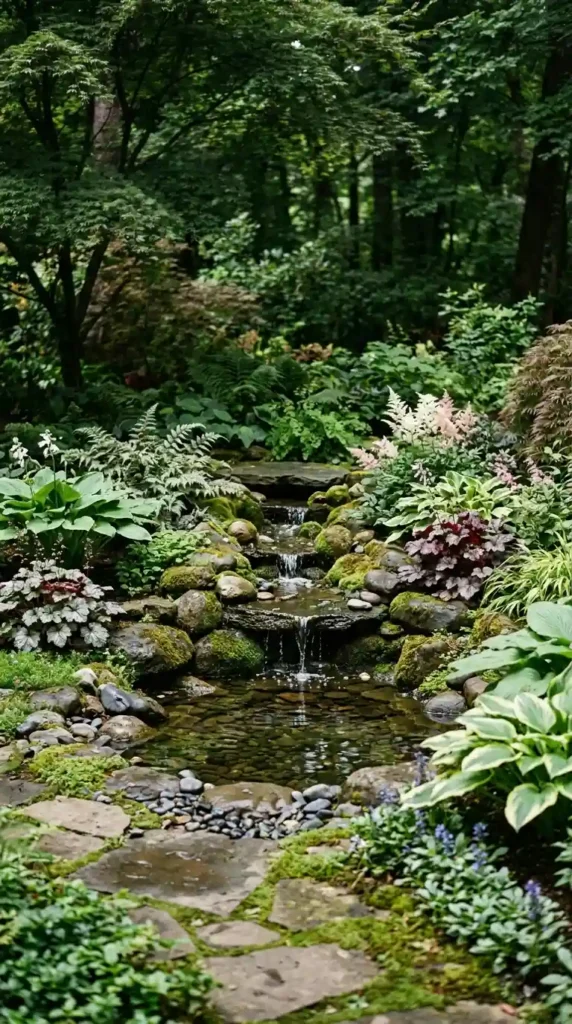
Water sounds improve relaxation in shaded gardens by masking noise and creating peaceful environments. Surrounding fountains with ferns and moss strengthens natural appearance while gentle flow of water enhances calm mood and supports wildlife activity in garden spaces and soft harmony.
7. Layered Planting For Depth
Layered planting builds depth in shaded garden design by combining tall shrubs, mid level perennials and low ground covers. This structure improves visual balance, reduces empty patches and creates naturally flowing landscapes that feel lush and well organized.
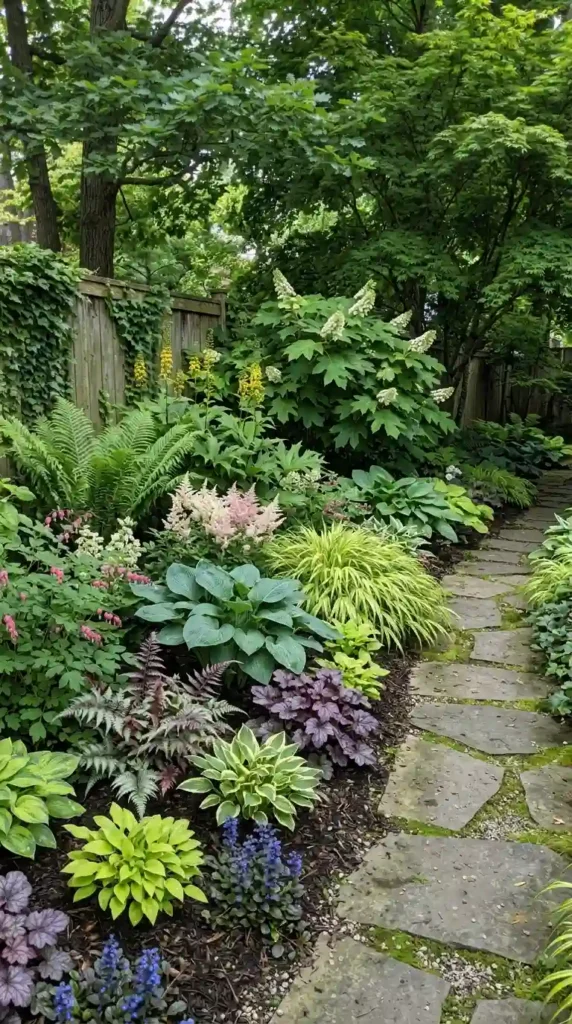
Layered planting enhances garden structure by using height variation and plant grouping. Tall plants form background medium plants fill middle space and ground covers soften edges, creating smooth transitions that make shaded gardens appear larger and more visually balanced.
8. Decorative Containers In Shade
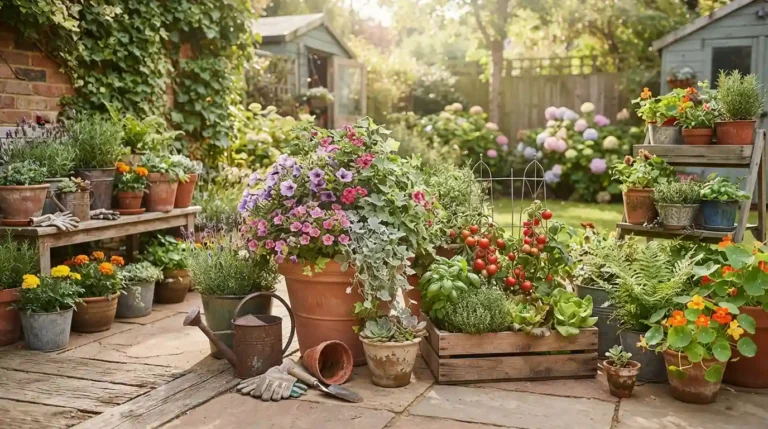
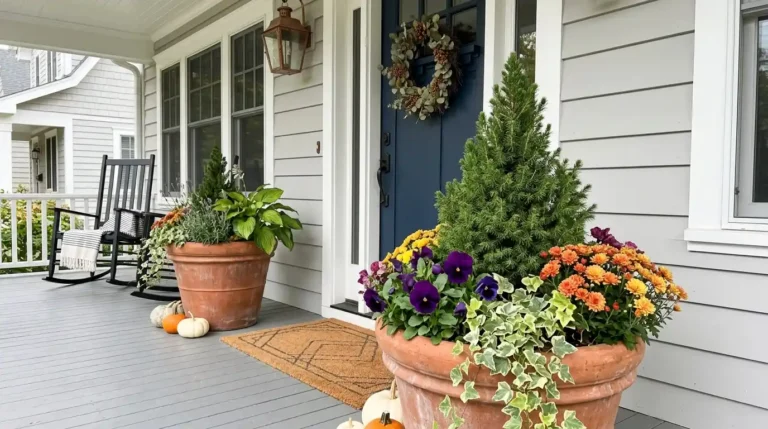
Decorative containers provide flexibility in shaded garden spaces by allowing movable plant arrangements. Shade tolerant plants in pots bring seasonal color highlight corners and refresh dull areas while enabling easy experimentation with textures heights and foliage combinations across outdoor areas.
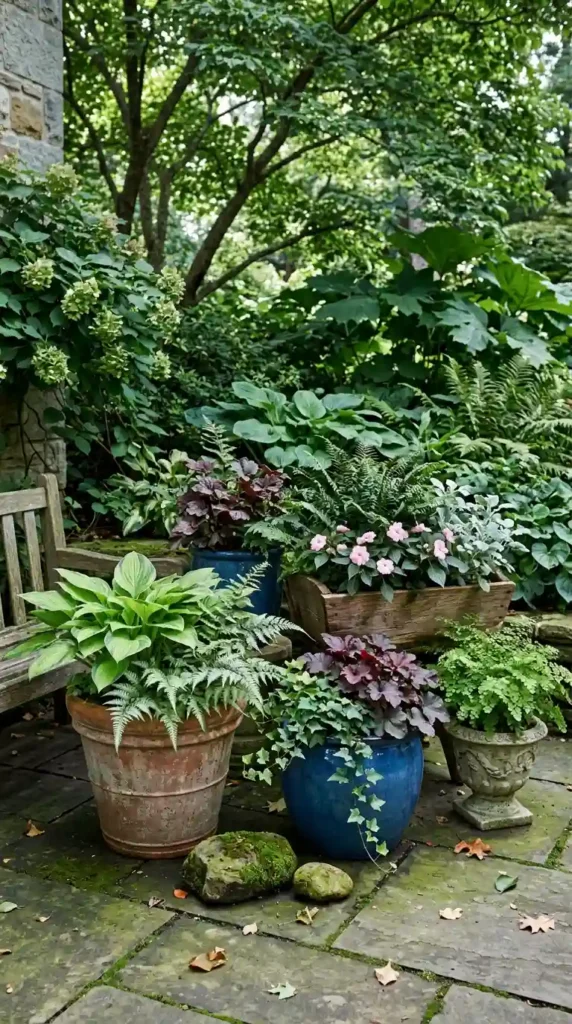
Container gardens work well in shaded patios, balconies and entryways where planting space is limited. Different pot sizes create visual variety while maintaining order. Plants such as begonias coleus and caladiums provide color and texture without dependence on full sunlight.
9. Vertical Shade Garden Ideas
Vertical planting systems maximize shaded areas by using wall trellises and hanging planters. These arrangements introduce greenery at multiple heights, improve space efficiency and create visually rich garden surfaces without requiring large ground planting zones in compact outdoor garden spaces.
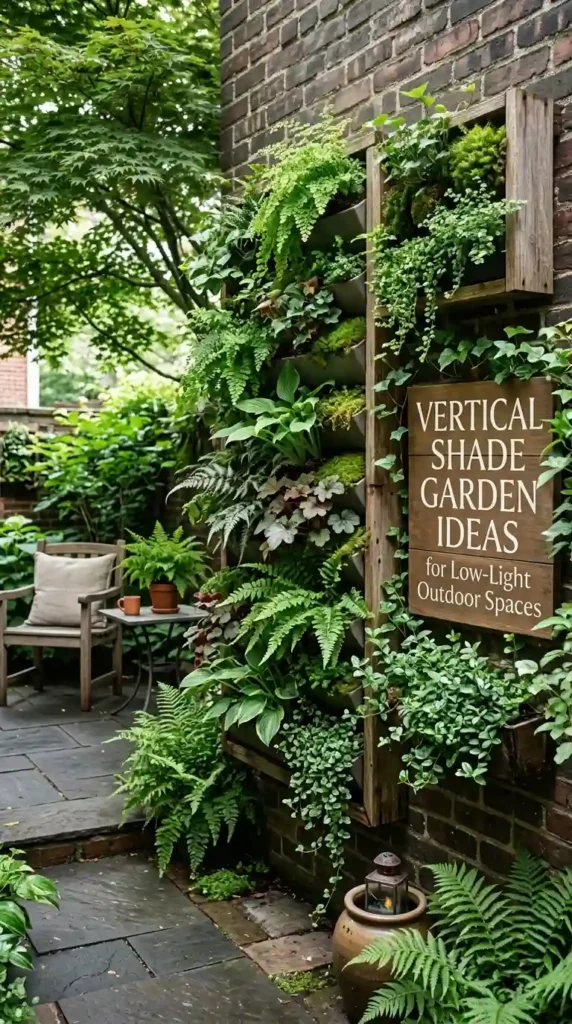
Vertical gardens improve shaded areas by adding layers of greenery to walls and fences. Climbing plants and hanging pots create depth while saving ground space, making small gardens feel larger and more visually dynamic overall with natural green appeal always.
10. Soft Garden Lighting
Soft lighting enhances Shade Garden Design Ideas by improving visibility and highlighting key features after sunset. Solar lanterns, pathway lights, and string lights create warm ambiance, define structure, and make outdoor spaces inviting in a gentle natural glow.
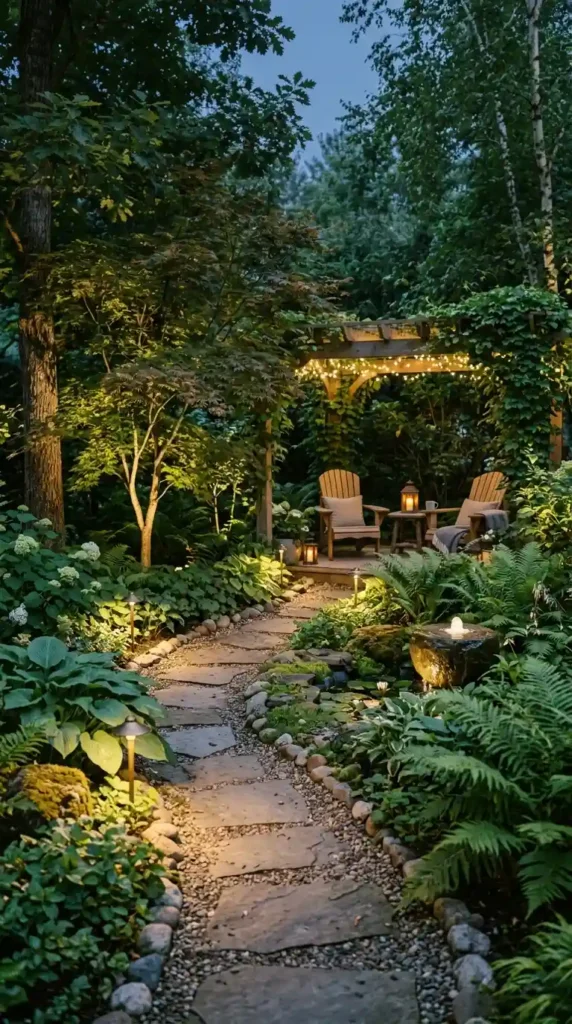
Lighting design improves safety and atmosphere in shaded gardens by reducing dark spots and defining pathways. Warm-toned lights highlight plants and seating areas, creating balanced outdoor environments that remain functional and visually appealing after sunset through evening hours calmly.
11. Moss Carpet Garden
Moss gardens thrive in shaded environments where moisture and low light support soft carpet-like growth. These green surfaces reduce soil erosion, add texture, and create a tranquil woodland atmosphere that blends naturally with surrounding shade-loving plants in very calm spaces.
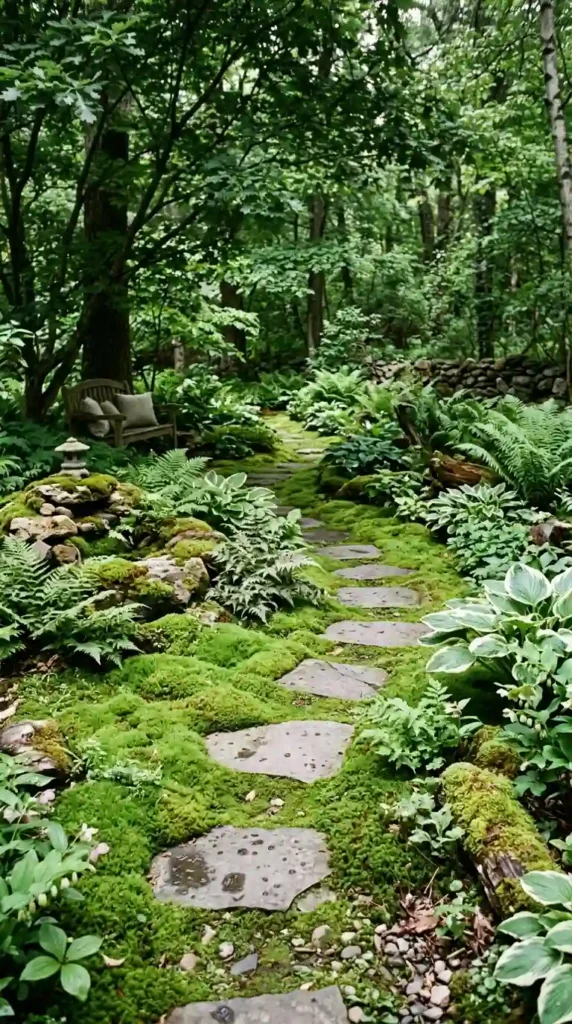
Moss landscapes remain low maintenance and require consistent moisture rather than direct sunlight. These gardens improve visual softness and create natural green carpets that connect stone pathways, plants, and shaded corners into unified, peaceful garden design in outdoor spaces beautifully.
12. Hydrangea Shade Borders
Hydrangeas bring color and volume to shaded gardens with large flower clusters and lush foliage. These plants perform well in partial shade offering seasonal blooms that enhance structure, softness, and visual depth across garden beds during warmer months very naturally.
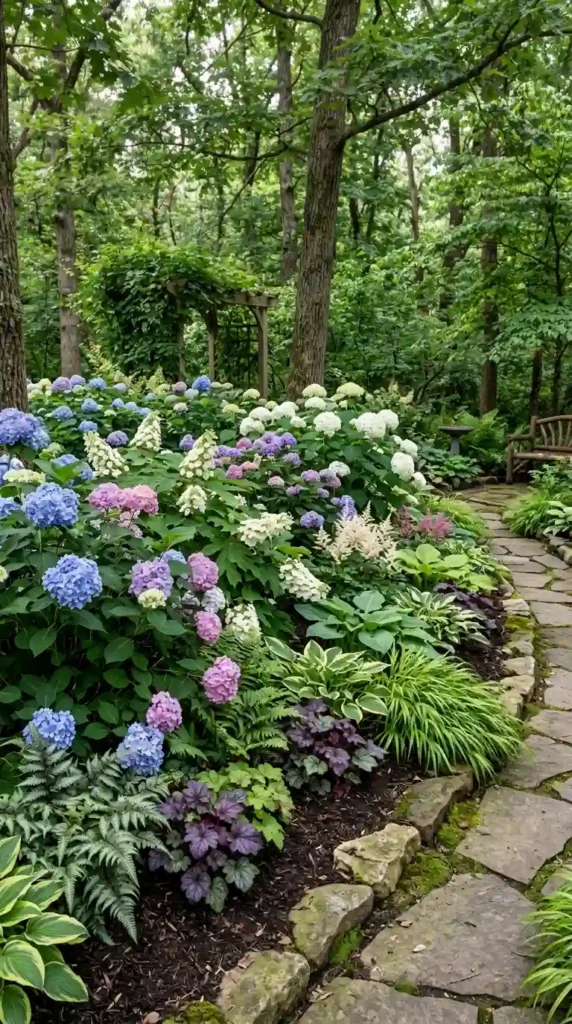
Hydrangea borders improve shaded garden structure by creating colorful focal points along pathways and edges. Their dense blooms contrast with green foliage and help define spaces while adding softness, making shaded landscapes feel balanced and visually appealing in natural design.
13. Gravel Pathways
Gravel pathways improve drainage and structure in shaded gardens while blending naturally with surrounding plants. Their textured surface reduces maintenance needs and creates a rustic aesthetic that supports smooth movement through outdoor shaded garden spaces effectively in a simple way always.
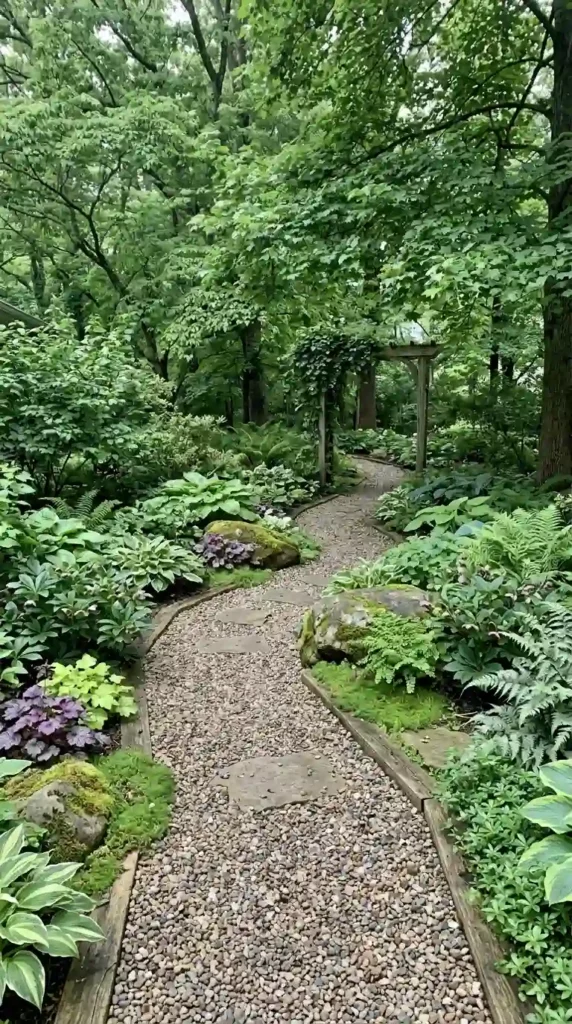
Gravel walkways define garden zones and guide movement through shaded areas without overwhelming natural scenery. Small stones allow water drainage and reduce muddy patches while maintaining simple elegant pathways that connect different sections of garden smoothly and are very naturally balanced.
14. Pergola Shade Structure
Pergolas create structured shade in garden spaces while supporting climbing plants like vines and flowering creepers. These wooden or metal frames define seating areas and provide filtered sunlight that enhances comfort and natural beauty during warm outdoor conditions very softly.
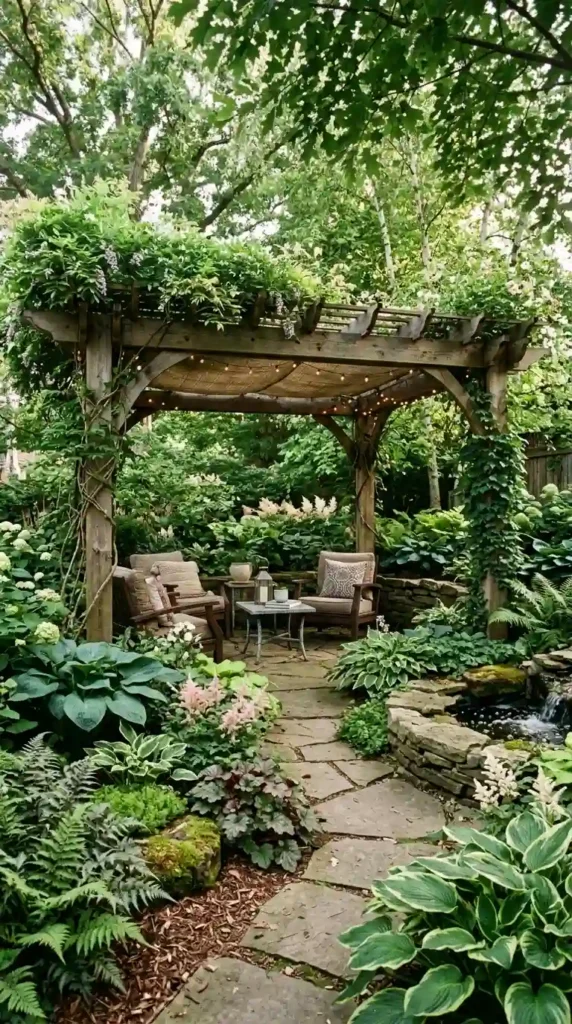
Pergola designs improve shaded outdoor areas by creating defined zones for relaxation and entertainment. Climbing plants like jasmine or ivy enhance visual appeal while providing natural cover that blends structure with greenery for balanced outdoor living environments in shaded gardens.
15. Ground Cover Planting
Ground cover plants fill empty shaded spaces by spreading low across soil surfaces. These plants reduce weed growth, retain moisture and create a soft carpet effect that connects larger plants into unified natural garden design in peaceful garden settings very naturally.
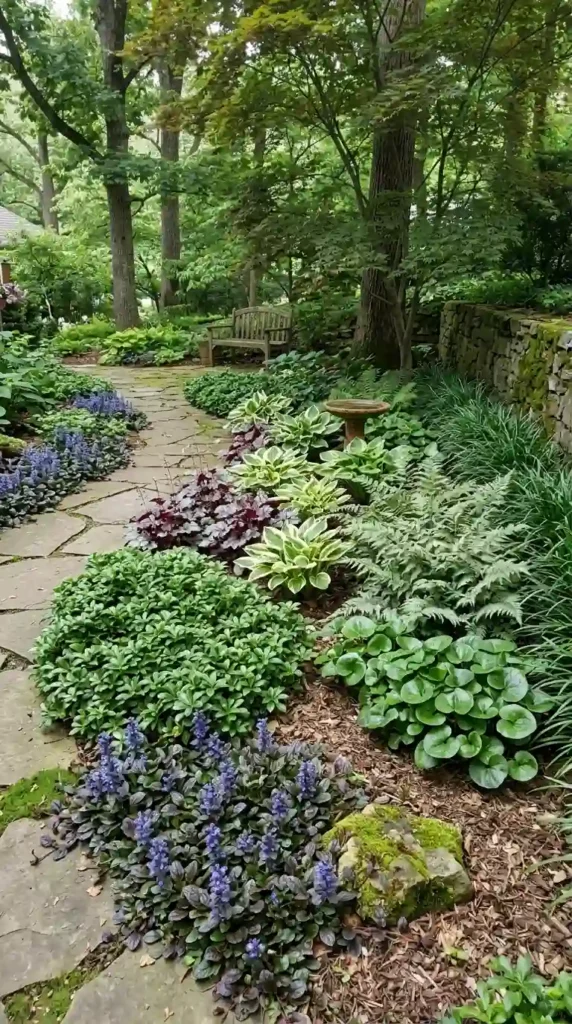
Ground covers improve shaded landscapes by reducing bare soil and enhancing visual continuity. Low growing plants like ivy or creeping thyme create seamless transitions between garden elements while maintaining moisture balance and reducing maintenance requirements in natural environments.
16. Rain Shade Garden Design
Rain shade gardens manage water runoff in shaded areas while supporting moisture loving plants. These designs improve drainage, prevent erosion and create sustainable green spaces that thrive naturally in low light garden environments with eco-friendly approach very beautifully designed in garden spaces always.
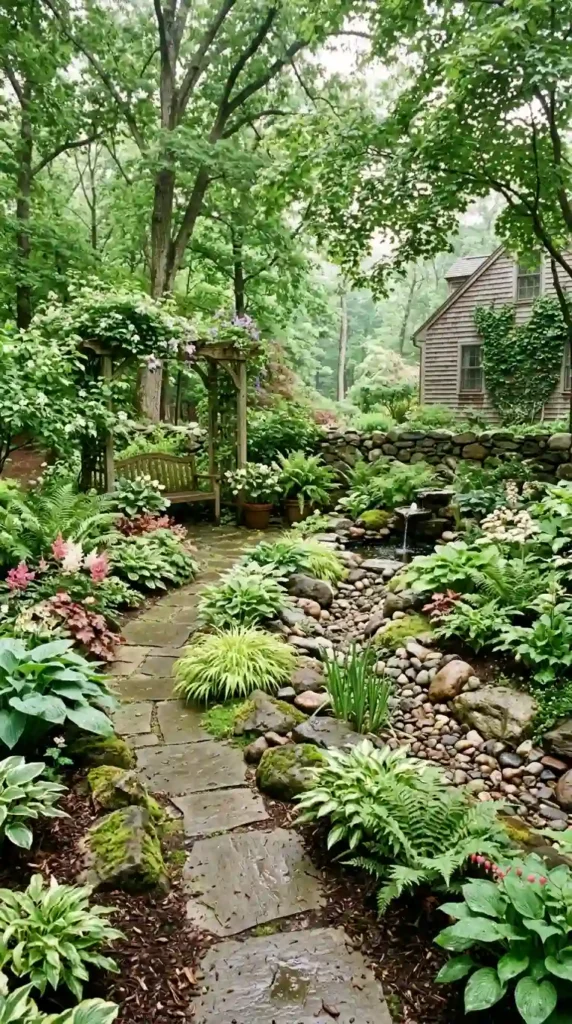
Rain garden layouts enhance Shade Garden Design Ideas by capturing excess water and directing it into planted zones. Moisture-rich soil supports lush vegetation while improving environmental balance and creating natural ecosystems that feel calm and sustainable.
How to Choose The Right Plants For Shade Gardens
Shade gardens need plants that can grow well with limited sunlight. Choosing the right varieties helps create a healthy, green space that stays attractive throughout the year without requiring full sun exposure.
- Understand shade levels like full shade, partial shade, and dappled shade to match plants with the correct light conditions for better growth and survival.
- Choose foliage plants such as ferns, hostas, and caladiums that naturally thrive in low light and maintain strong color and texture.
- Select shade-tolerant flowering plants like impatiens, begonias, and astilbes to add soft color to darker garden areas.
- Use well-draining, nutrient-rich soil to support healthy root development in shaded and cooler environments.
- Combine plants with different heights and textures to create depth and visual balance in the garden design.
Conclusion
These Shade garden design ideas transform unused outdoor corners into calm green spaces. Careful planning with plant pathways and seating creates balance. These shaded areas become peaceful retreats, improving the outdoor living experience naturally.
Shaded gardens continue offering beauty and comfort when designed with thoughtful choices. Natural textures and soft lighting, layered planting enhance the atmosphere while creating relaxing, functional, visually pleasing outdoor spaces year round always.